






















































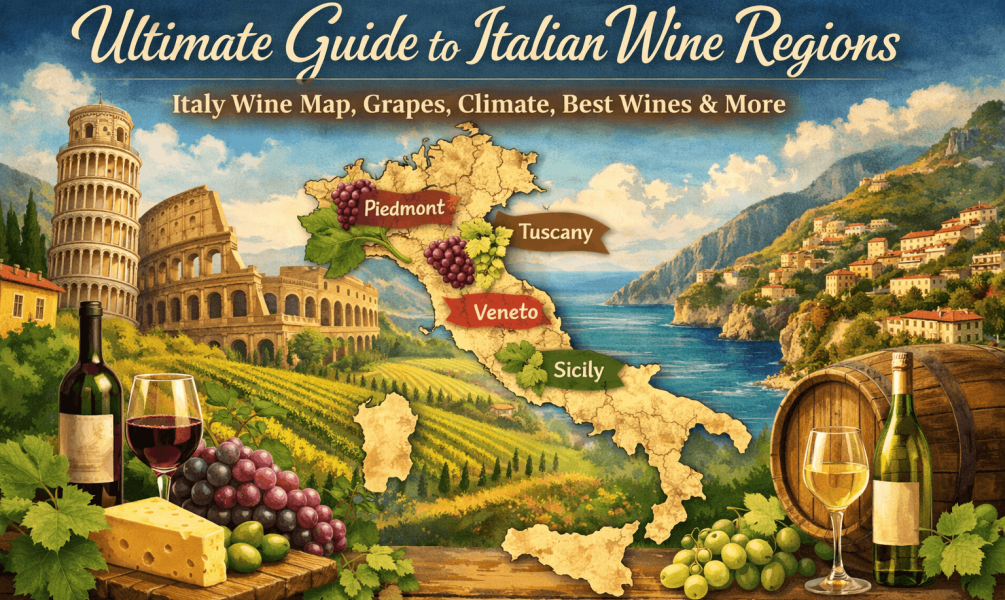
Why Italy Is The World’s Largest Wine Producer
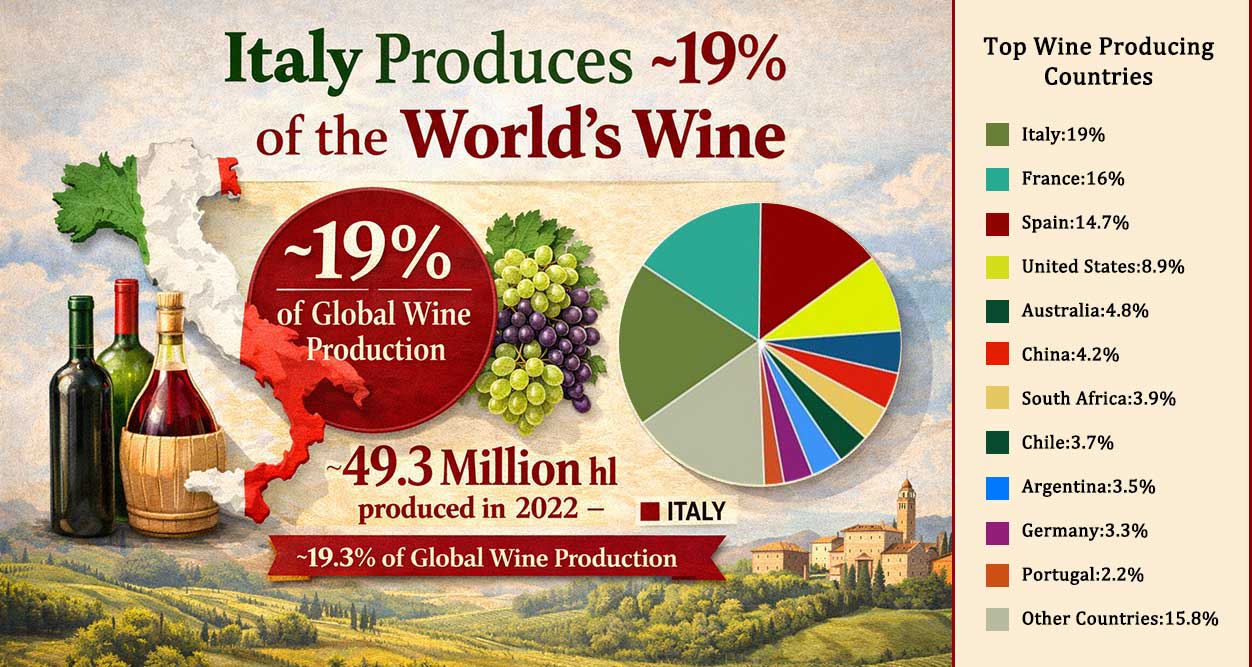
Italy is not just a name that resonates with diverse, quality wines, but is also the largest producer of wine in the world. As per data, Italy produced 49.3 million hectolitres of wine in 2022, representing nearly 19% of global wine production. This is not by chance, as Italy’s winemaking success is driven by factors that are imperative for quality wine production.
Italy has diverse climate zones, from Alpine cool in the North to Mediterranean warmth in Sicily and Sardinia - this climatic diversity supports winemaking across a wide range of styles from complex, age-worthy Barolo to refreshing Prosecco. Italy’s assorted geographic expanse spreads across hills, plains, various soil types, and even the volcanoes add to terroir driven wines from the country. Italy also has over 800 indigenous grape varieties, which is more than most of the wine producing countries. Tourism in Italy is greatly based on the wine industry spread across many iconic regions supporting over 1.2 million jobs.
Italian Wine Classification Explained - Understanding DOC, DOCG & IGT
All Italian wine is labeled under controlled systems to indicate quality and origin. Like other wine growing and wine producing regions in the EU, Italian Wine Law has an established classification system and all wine produced within the country is a part of one of the tiers that exist in the system. Italian wines are classified under - DOC, DOCG, and IGT. Lets understand the terms and what to expect from wines labelled with each of them:
DOCG (Denominazione di Origine Controllata)
This is the most prestigious classification in the Italian wine hierarchy. To be able to use it or produce wines labelled as DOCG, producers require a strict adherence to tightly defined rules. Italian wine labelled as DOCG comes from the historical area of production and is always recognised as of particular value for its production. The rules demand chemical, physical, and organoleptic analysis to be carried out to ensure that the flavour is unique and the quality of DOCG wines is very good. Winemaking techniques, grape varieties, size of land vineyard parcel, blending ratios, and harvesting methods are all defined by law. The rarest of these wines are most appreciated for their great complexity, balance, and ability to age in the bottle. The tip of the Italian wine classification pyramid is represented by these wines.
The best Italian DOCG wines to try :
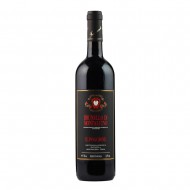
IL Poggione Brunello Di Montalcino Italian Red Wine - From the warm, dry part of Montalcino, this wine along with structure, power and presents the jammy warmth of red fruits and oak at its core. Perfect to enjoy now or age further to let the complexity evolve. A perfect wine on its own or best when paired with gourmet treats in a stunning Italian Wine Gift Basket.
Italian Trio Fine DOCG Red Wine Gift Set - Italian red wines that speak power of elegance and ageing. A handpicked curation, these wines showcase the best that Italian wine regions have to offer and speak well of the terroir.
Arnaldo Rivera Undicicomuni Barolo Italian Red Wine - Made from 100% Nebbiolo Barolo wine from Italy needs no formal. To make it even special we’ve wrapped the bottle in a luxurious ribbon and crystal embellishment, paired with Godiva Chocolate - a Wine and Godiva Chocolate Gift straight out of dreams.
DOC (Denominazione di Origine Controllata)
DOC wines just like DOCG are a part of the Italian PDO (Protected Designation of Origin), which forms the higher quality classification. Wines under this classification have strict rules for grape growing and winemaking, but are less rigid than DOCG. There are hundreds of DOC labels across all Italian wine producing regions. Wines must use grapes coming from regions or municipalities classified as DOC. Grape varieties, alcohol level, and winemaking techniques are all laid out by Italian wine law. These rules ensure the quality and unique flavour profile of DOC wines. A region must be a quality DOC for at least 10 years, before being promoted as a DOCG. These wines come in the PDO category, above the IGT wines in the Italian wine classification pyramid.

IGT (Indicazione Geografica Tipica)
This acronym is the part of European PG (Protected Geographical Indication). IGT (Indicazione Geografica Tipica) wines have certain rules to follow with regards to the territory of origin, grape variety, the colour, but overall the rules are relaxed compared to PDO wines labelled as DOC or DOCG. These wines have a certain quality and a more fruit-forward nature that makes them approachable and ready for early drinking. IGT wines of Italy sit above the generic VDT wines in the Italian wine classification pyramid.
Generic Wines Of Italy
In very simple terms, these times can be understood as “table wines”, simple, fruity and fit for early drinking rather than ageing. The term table wines has long been replaced by “generic wines”, a category that includes all those wines which do not have to comply with any production or growing regulations. These labels show the producers name, area where grapes are from, along with colour, and other relevant information. Grape variety and year of production or harvest can be omitted. These wines therefore are at the base of the Italian wine classification pyramid, and are termed as Vino or “Vino da Tavola” (VDT).
Other Italian Wine Classifications : Classico, Riserva and Superiore
On DOC and DOCG labelled wines, you may also come across other legally defined terms - “Classico” which refers to wines produced in the oldest, historic territory of a wine region. The term “Riserva” indicates wines that have been aged for much longer periods than specified under higher wine classifications. The term “Superiore” refers to wines produced in accordance with stricter rules than those laid down in specifications for these wines, Superiore labeled wines have higher alcohol content than the basic type of same classification wine, which does not state the term Superiore.
What Are Super Tuscans?
In the 1970s, some Tuscan winemakers began experimenting outside traditional DOC rules. They blended international grapes like Cabernet Sauvignon and Merlot with Sangiovese, or aged wines in French oak barrels. Because these wines didn’t follow DOC regulations, they were labeled under the more flexible IGT classification.
Over time, these wines became internationally famous and are now known as Super Tuscans. Famous examples include: Sassicaia and Tignanello. Today, Super Tuscans are considered some of the most prestigious Italian wines, often priced alongside Barolo and Brunello.
Italian Wine Regions - An Overview
Northern Italy Wine Regions
Many of Italy’s most famous and prestigious wines come from Northern Italy. The climate is generally cooler because of the influence of the Alps, which helps grapes retain their freshness and acidity - both of which are necessary for premium quality wines.
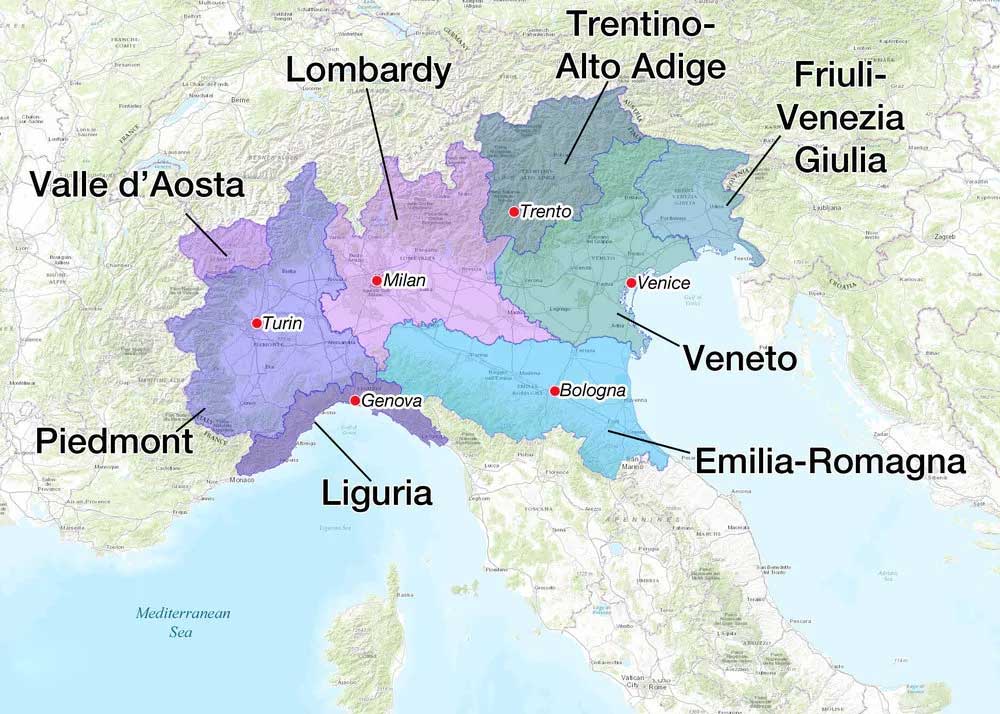
Piedmont is known for powerful red wines like Barolo and Barbaresco, made from the native Italian black grape Nebbiolo. These wines are bold, structured, and the best ones have the ability to bottle age for decades showing only their best with time. Softer reds like Barbera and sweet sparkling Moscato both from the Asti region of Piedmont are known as Barbera d’Asti and Moscato d’Asti respectively.
Veneto, Italy’s largest wine producing region is home to Prosecco, Italy’s most popular sparkling wine. It’s light, fresh, and perfect for easy-drinking and for celebrations. Veneto also produces rich red wines like Amarone Della Valpollicella, which are made from dried Corvina grapes and taste deep and intense.
Regions like Trentino and Friuli-Venezia Giulia are well-known for white wines from Pinot Grigio. Northerly vineyards in the foothills of Alps are cooled by cold mountain air making a crisp style of Pinot Grigio. Grapes from warmer sites produce wines with medium acidity and juicy tropical fruit notes.
In simple terms, Northern Italy is known for elegant reds, fresh whites, and high-quality sparkling wines. Wines from across the region fall under different classifications, depending upon their origin and winemaking.
Central Italy Wine Regions
Central Italy is often considered the heart of classic Italian wine. The rolling hills, moderate climate, and long sunshine hours create balanced and food friendly wines.
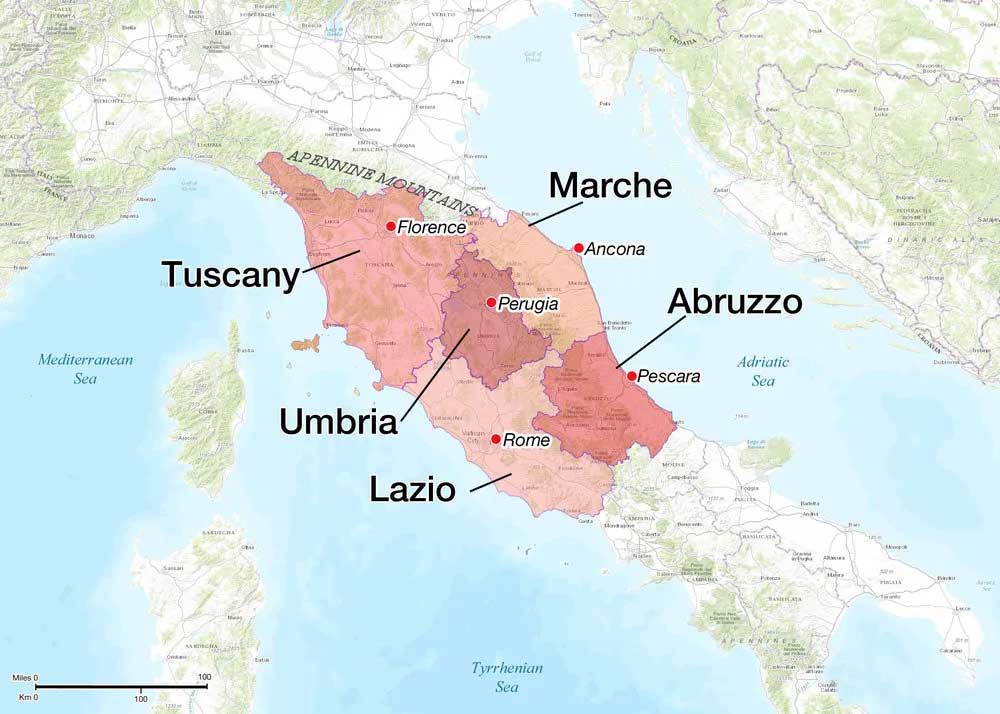
Tuscany is the superstar region here. It produces Chianti, Brunello di Montalcino, and Vino Nobile di Montepulciano, mostly made from the Sangiovese grape. These wines are known for bright cherry flavors, earthy notes, and excellent pairing with pasta and grilled meats. Not to ,mention that the best ones have a great potential to age in the bottle. Tuscany is also home to the iconic Super Tuscans - premium wines that blend traditional Italian grapes with international varieties.
Umbria, Tuscany’s neighbour, is famous for bold red wines like Sagrantino, which are powerful and long-lasting.
Marche produces fresh white wines like Verdicchio, which are light, slightly nutty, and great with seafood.
Lazio, the region around Rome, is known for easy-drinking white wines like Frascati. Simply put, Central Italy is resonant with balanced reds, versatile whites, and perfect food friendly wines.
Southern Italy Wine Regions & Islands
Southern Italy and the islands have a warmer Mediterranean climate. This means more sunshine, which results in richer, fruitier, and fuller-bodied wines.
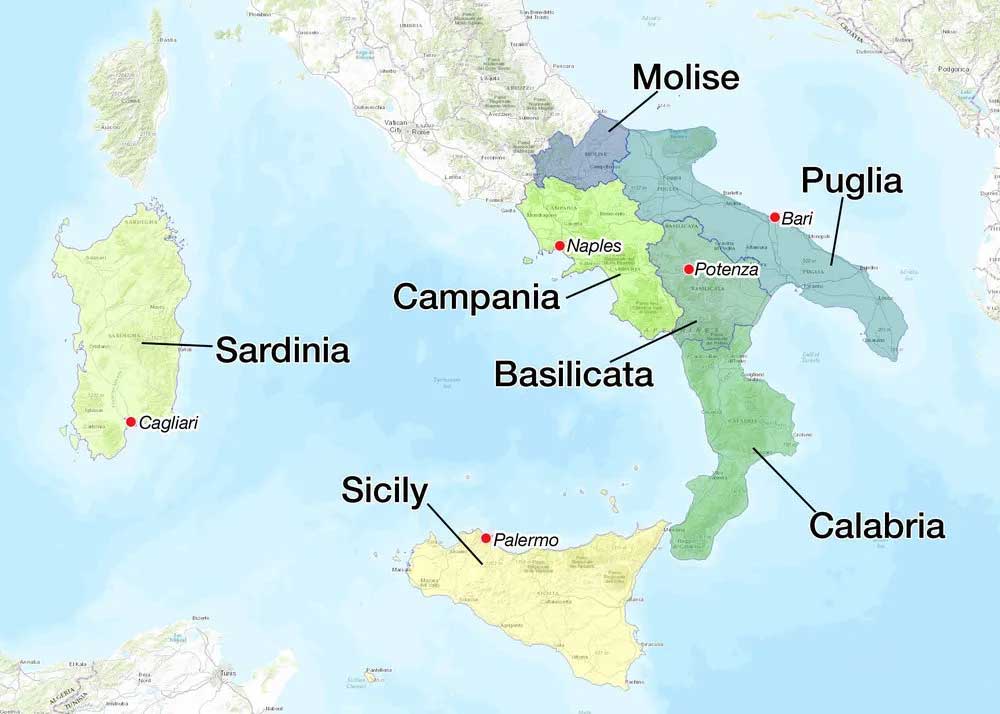
Sicily, Italy’s largest island, is famous for bold red wines like Nero d’Avola. The volcanic soils near Mount Etna also produce elegant, yet powerful and mineral-driven wines.
Puglia, located in the “heel” of Italy’s boot, produces Primitivo, a juicy, full-bodied red wine with ripe fruit flavours.
Campania and Basilicata are known for Aglianico, a strong and age-worthy red wine sometimes called the “Barolo of the South.”
Sardinia produces refreshing white wines like Vermentino and rich reds like Cannonau. In simple terms, Southern Italy basks in warm climate and wines showcase bold flavours and great value for money.
Major Italian Wine Grapes : Where They Grow & What Is The Wine Style
| Grape Variety | Main Region(s) | Wine Color | Wine Style (Easy Description) |
|---|---|---|---|
| Sangiovese | Tuscany (Chianti, Brunello) | Red | Medium-bodied, cherry flavors, earthy, food-friendly |
| Nebbiolo | Piedmont (Barolo, Barbaresco) | Red | Bold, high tannin, age-worthy, rose & tar aromas |
| Barbera | Piedmont | Red | Juicy, low tannin, bright acidity, everyday red |
| Montepulciano | Abruzzo, Marche | Red | Smooth, dark fruit, easy-drinking |
| Aglianico | Campania, Basilicata | Red | Powerful, structured, great for aging |
| Nero d’Avola | Sicily | Red | Rich, ripe fruit, warm-climate red |
| Primitivo | Puglia | Red | Full-bodied, spicy, bold fruit flavors |
| Cannonau (Grenache) | Sardinia | Red | Soft tannins, red fruit, slightly herbal |
| Corvina | Veneto (Valpolicella, Amarone) | Red | Light to rich (depending on style), cherry notes |
| Glera | Veneto | White (Sparkling) | Fresh, light, bubbly (Prosecco) |
| Pinot Grigio | Veneto, Friuli, Trentino | White | Crisp, light, refreshing |
| Verdicchio | Marche | White | Zesty, citrusy, slightly nutty |
| Vermentino | Sardinia, Liguria, Tuscany | White | Aromatic, fresh, mineral-driven |
| Trebbiano | Central Italy | White | Light, simple, high acidity |
| Fiano | Campania | White | Aromatic, floral, medium-bodied |
Climate & Terroir of Italian Wine Regions Shape Italian Wines
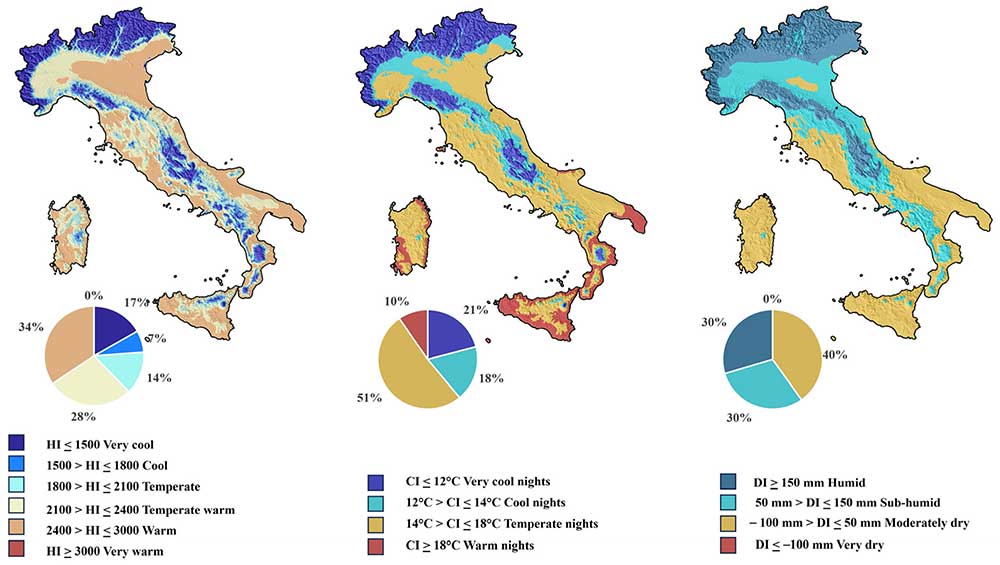
Italy’s wines taste so different from region to region because the country itself is incredibly diverse. Italy stretches from the Alps mountains in the north to the warm Mediterranean islands in the south and that range of climates changes how wine grapes grow and taste.
In Northern Italy, cooler temperatures from the Alps slow down grape ripening. This helps grapes keep their acidity and develop layered flavours. That’s why wines like Barolo feel structured and age worthy, while Pinot Grigio from the north tastes crisp and refreshing.
Central Italy, especially Tuscany and Umbria, benefits from warm days and cooler nights. This temperature difference helps grapes ripen fully while staying balanced with refreshing acidity. The rolling hills also provide good sun exposure and drainage, which results in concentrated yet elegant wines like Chianti and Brunello.
Southern Italy and the islands are warmer and sunnier. More heat means riper grapes and fuller-bodied wines, such as Nero d’Avola from Sicily or Primitivo from Puglia. In areas like Mount Etna and Campania, volcanic soils add a subtle mineral or smoky character to the wines.
Soil, altitude, and even sea breezes all play a role. Limestone, clay, volcanic rock, and coastal winds influence structure, freshness, and flavor. In Italy, wine is deeply connected to place and each region tells a different story in the glass.
Best Italian Wine Regions For Beginners
If you’re new to Italian wine, start with approachable regions:
- Chianti (Tuscany) : easy drinking, food-friendly.
- Pinot Grigio (Veneto/Triveneto) : light, refreshing white wine.
- Barbera (Piedmont) : versatile and affordable wine.
- Prosecco (Veneto) : fizzy crowd-pleaser, never fails to please.
- Nero d’Avola (Sicily) : bold but not overly tannic.
Italian Wine Price Guide: What Do Italian Wines Really Cost?
If you're wondering about the Italian wine price range, the good news is this: Italy offers exceptional wines at almost every budget, so no breaking the bank and you can still enjoy an Italian wine. From affordable everyday bottles to world class, investment worthy collector wines like Barolo and Brunello, there’s something for every wine lover. The cost of Italian wine depends mainly on the region, classification (DOC vs DOCG), aging requirements, and producer reputation.
Affordable Italian Wines (Best Value Picks)
This is where Italy truly stands out. Some of the best affordable Italian wines come from regions like Sicily, Puglia, and Abruzzo. Most well known wines are:
- Pinot Grigio DOC
- Montepulciano d’Abruzzo
- Basic Chianti DOCG
- Prosecco DOC/DOCG
- Primitivo from Puglia
These wines are mostly in the IGT category, fresh, food-friendly, and ideal for everyday, easy drinking. If you’re searching for best Italian wines $20 - $50, this category offers unbeatable value for quality.
Premium Italian Wines & some DOCG Icons
This is where Italy’s most prestigious wines sit. Examples include:
- Barolo DOCG
- Brunello di Montalcino DOCG
- Amarone della Valpolicella
- Franciacorta DOCG
- Super Tuscans
These wines are typically aged longer, produced in smaller quantities, and come from best vineyard sites of renowned estates. The price of Italian DOCG wines reflects both strict regulations and global demand.
Best Value Italian Wine Regions
If you're looking for high-quality Italian wines at reasonable prices, explore:
- Abruzzo (Montepulciano d’Abruzzo)
- Sicily (Nero d’Avola, Etna wines)
- Puglia (Primitivo, Negroamaro)
- Marche (Verdicchio)
These regions consistently deliver some of the best value Italian wines without premium pricing. Top 10 Italian Wines to Try (Beginner to Premium)
If you’re exploring the best Italian wines, start with these iconic and must try bottles that represent Italy’s top wine regions:
- Barolo DOCG (Piedmont) - Bold, age-worthy Nebbiolo; one of the most famous Italian red wines.
- Brunello di Montalcino DOCG (Tuscany) - Premium Sangiovese with depth and elegance.
- Chianti Classico DOCG (Tuscany) - Classic, food-friendly Italian red.
- Amarone della Valpolicella (Veneto) - Rich, powerful, dried-grape red wine.
- Tenuta San Guido Sassicaia Bolgheri - Cabernet Sauvignon’s intensity and prowess, with refined flavours of Sangiovese, this wine offers long finish and great ageing potential.
- flavours of Sangiovese, this wine offers long finish and great ageing potential.
- Prosecco DOC (Veneto) - Italy’s most popular sparkling wine.
- Franciacorta DOCG (Lombardy) - Italy’s luxury sparkling wine, Champagne-style.
- Etna Rosso (Sicily) - Elegant volcanic red with mineral character.
- Montepulciano d’Abruzzo (Abruzzo) - Smooth, affordable everyday red.
- Verdicchio dei Castelli di Jesi (Marche) - Crisp, refreshing white wine.
- Primitivo di Manduria (Puglia) - Bold, ripe southern Italian red.
These wines cover Northern, Central, and Southern Italian wine regions, making them a perfect starting point for discovering Italy’s diverse wine landscape.
Final thoughts on Italian Wine Regions
From powerful, intense reds of Piedmont to classic Sangiovese wines of Tuscany, and the bold Super Tuscans to fruity wines of Puglia, Italian wines are unique coming from some of the world’s most diverse and celebrated wine regions.
Whether you’re exploring Italian wine regions, discovering DOC and DOCG wines, or searching for the best Italian wines to try, you can read our blog - Italy delivers quality at every level, right from affordable everyday wines to investment grade bottles.
The true beauty of the Italian wines lie in the deep connection to climate, terroir, and tradition, all of which are cornerstones to its greatness. Start with the region of your choice today, try a bottle, and let each grape narrate its story.











Leave a Comment