

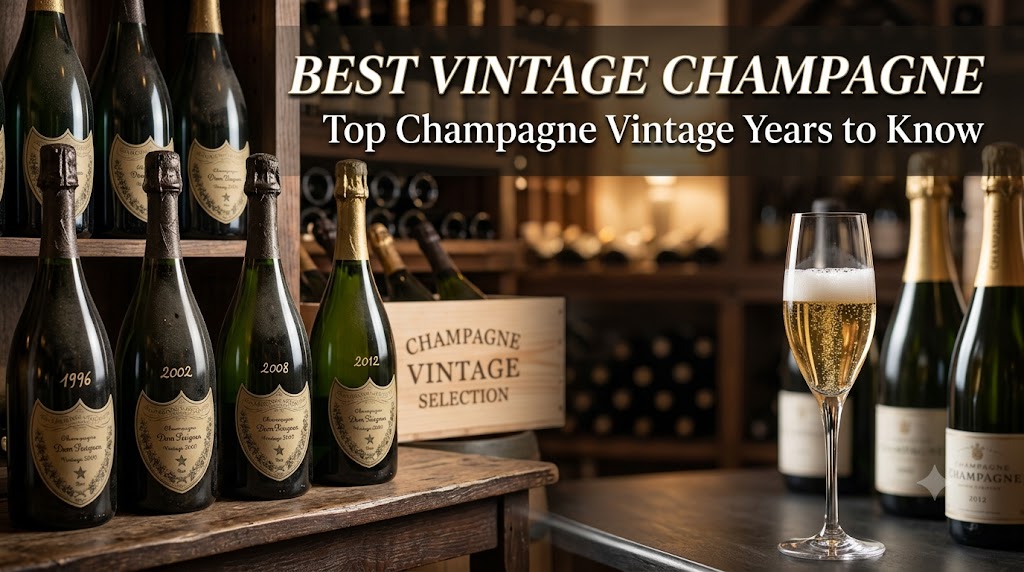
We know of many different champagne types, but when it comes to vintage champagne, the year on the bottle can tell you far more than just when the grapes were harvested. A great vintage can produce wines with remarkable freshness, concentration, complexity, and aging potential. This is the reason why certain Champagne vintage years have become particularly sought after by fine wine collectors and wine lovers.
But there is an important distinction: there is no single “best” vintage for everyone. A champagne from 1996 may appeal to someone who loves intense acidity and mature complexity, while a 2012 may be more appealing to someone looking for richness, balance, and immediate pleasure. So, what is champagne, what are the best champagne vintage years, and which bottles are worth paying for? Let us find out!
What Is Vintage Champagne?
Unlike non-vintage champagne, which blends wines from different harvests to create a consistent house style, vintage champagne is made from grapes harvested in a single year. champagne houses do not necessarily declare a vintage every year. The decision depends on the quality and character of the harvest. The best champagnes are given extended aging in the bottle before release. In fact, all champagne must age for 12 months in the bottle in contact with dead yeast; this is Lees aging. Vintage champagnes age for a much longer time. This aging allows the wine to develop complex flavors beyond fresh fruit, like brioche, toast, nuts, honey, dried fruit, and spice, while retaining the acidity that gives champagne its characteristic freshness. This is what makes vintage champagne particularly fascinating—it reflects not only the house style but also the personality of the growing season.
What Makes a Great Champagne Vintage?
A great year in Champagne generally combines ripe, healthy champagne grapes with enough acidity to give the wines freshness and structure. Weather throughout the growing season matters enormously, but so does the skill of the producer. This is why a vintage chart should be treated as a guide rather than an absolute ranking. A superb producer can make an exceptional wine in a less celebrated year, while even a famous vintage can show differences between houses and cuvées. But several years consistently stand out.
Best Champagne Vintage Years
| Vintage | Style | Why It Stands Out |
|---|---|---|
| 1996 | ntense, precise, high-acid | Exceptional longevity and energy |
| 2002 | Rich, elegant, balanced | Ripe fruit with impressive structure |
| 2008 | Fresh, taut, mineral | Outstanding precision and aging potential |
| 2012 | Powerful, generous, complex | Excellent balance of ripeness and acidity |
| 2013 | Fresh, focused, mineral | Particularly exciting for Chardonnay lovers |
| 2014 | Bright, energetic, elegant | Freshness and excellent definition |
1996: For Power and Longevity
The 1996 vintage is legendary for its combination of ripe fruit and exceptionally high acidity. The result is a vintage champagne with energy, tension, and remarkable aging potential. Well-stored bottles can now show layers of toast, citrus, honey, nuts, and savory complexity while retaining impressive freshness in the glass. For lovers of mature champagne, 1996 remains one of the great champagne vintages.
2002: Rich, Refined, and Approachable
If 1996 is about tension, 2002 is about harmony. Excellent weather during the growing season produced champagne grapes with ripeness and flavor concentration while retaining enough acidity to keep the wines balanced. The best 2002 champagnes combine generosity with precision and have developed beautifully with age. This is one of the good champagne vintages to look for if you want a bottle that offers both maturity and richness in each sip.
2008: The Modern Classic
Ask wine professionals about the best vintage champagne, and 2008 is likely to enter the conversation. The year produced wines with remarkable freshness, concentration, and precision. Cool conditions helped preserve acidity while allowing the grapes to achieve excellent ripeness. The result is champagne that feels energetic and tightly structured, with the potential to develop for many years.
2012: Powerful and Elegant
The 2012 vintage offers a slightly different expression. It combines ripe fruit and concentration with the acidity needed to maintain freshness. The wines tend to be generous and expressive, making 2012 one of the more approachable great Champagne vintages for people who don't want to wait decades before opening a bottle.
2013 and 2014: Don't Overlook the Less Obvious Years
Vintage champagne isn't only about the famous years. 2013 produced wines with freshness and mineral character, with Chardonnay performing particularly well in many examples. 2014 also produced bright, energetic wines with excellent freshness.
Best Vintage Champagne Bottles to Look For
Once you've identified a great year, the next question is, which bottle? Choose from some of the most sought-after prestige cuvées handpicked by our expert:
- Dom Perignon: A classic choice for exploring vintage variation. The house releases only vintage champagne, making it particularly interesting for comparing years. Curious about price? you can checkout this Dom Perignon price guide blog.
- Krug Vintage champagne: Known for depth, complexity, and a distinctive house interpretation of each harvest.
- Louis Roederer Cristal: Particularly compelling in celebrated vintages such as 2008 and 2012.
- Bollinger La Grande Année: A richer, more gastronomic style that can be spectacular with age. One of the finest for champagne & food pairing.
- Billecart-Salmon Cuvee Louis Salmon Blanc de Blancs Brut: A benchmark Blanc de Blancs for lovers of Chardonnay-driven champagne.
- Salon Blanc de Blancs Brut Vintage champagne: One of the ultimate expressions of vintage Chardonnay, produced only in exceptional years.
What Are the Best Dom Pérignon Vintages?
For anyone specifically searching for the best Dom Pérignon vintages, the same great champagne years provide an excellent starting point. Dom Pérignon 2008 is particularly sought after for its precision, freshness, and aging potential. Dom Pérignon 2012 offers a richer and more generous interpretation, while older vintages such as 1996 and 2002 can offer fascinating mature complexity when properly stored.
However, the “best” Dom Pérignon vintage ultimately depends on the style you enjoy. A younger 2008 may appeal to someone who loves crisp freshness and minerality; a mature 2002 may be preferable to someone looking for toast, honey, and developed complexity. And, take our word for it - Dom Perignon is the best champagne to give as a gift
How to Choose a Vintage Champagne
If you're buying vintage champagne, don't look at the year alone. Consider the producer, prestige cuvée, disgorgement date, storage conditions, and bottle provenance. A perfectly stored bottle from a slightly less fashionable vintage can be far more enjoyable than a famous vintage that has been poorly stored.
Also think about when you want to drink it? For a mature, complex experience, look for older vintages such as 1996 or 2002. For freshness, energy, and aging potential, 2008 is an excellent choice. If you want a combination of generosity and structure, 2012 is particularly appealing.
Final Thoughts
The best champagne vintages are not simply the years with the highest scores. They are the years that produced wines with balance, character, and the ability to evolve. If you are building a champagne collection, 1996, 2002, 2008, and 2012 are excellent years to know. But perhaps the most enjoyable approach is to taste different vintages and discover how champagnes can be so dramatically different, based on the character of the harvest. After all, the magic of vintage champagne lies in precisely that - every bottle captures a particular year in champagne and gives you the chance to taste it decades later.