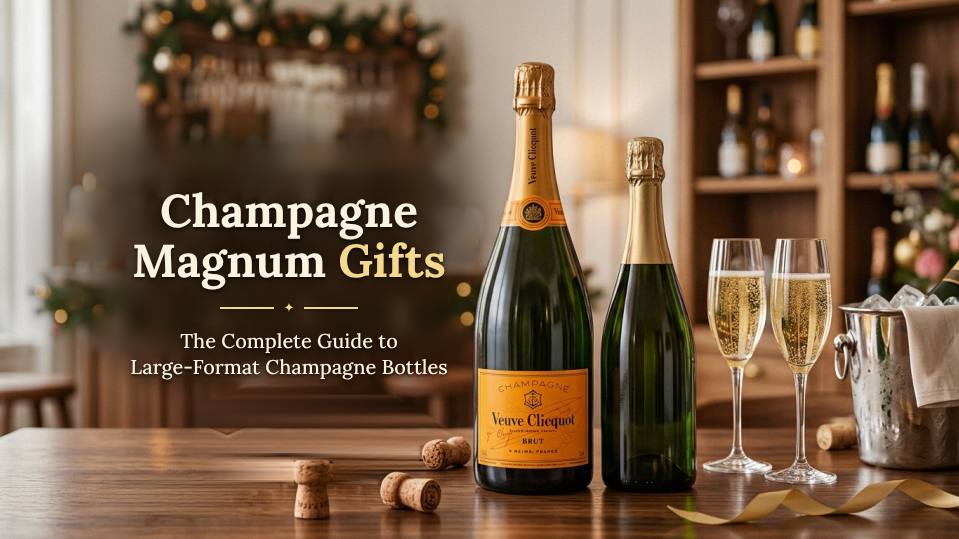
Gift Guide · Large-Format Champagne
Champagne Magnum Gifts: the complete guide to big bottles
How many bottles are in a magnum, every size from double magnum to Melchizedek, why champagne tastes better in a big bottle, and how to pick the perfect one to give.
By The Wine & Champagne Gifts team · Updated October 2026 · 12 min read

| 1.5 L | in a champagne magnum |
| 2 | standard bottles in one magnum |
| 12 | glasses per magnum |
| 50.7 oz | in US fluid ounces |
Quick answer: A champagne magnum is a 1.5-litre bottle that holds the same as two standard 750 ml bottles and pours about 12 glasses. Bigger formats follow: the Jeroboam or double magnum (3 L, 4 bottles), Rehoboam (4.5 L), Methuselah (6 L), Salmanazar (9 L), Balthazar (12 L), Nebuchadnezzar (15 L), and the giant Melchizedek (30 L, 40 bottles). Champagne ages more slowly and gracefully in a magnum, which is why it makes such a standout gift.
Table of Contents
- What is a champagne magnum?
- Magnum vs standard champagne bottle
- Champagne bottle sizes: the complete large-format chart
- Why champagne tastes better in a magnum
- Our champagne magnums, ready to gift
- Why a champagne magnum makes the perfect gift
- How many magnums do you need?
- How to choose the right champagne magnum
- How much does a champagne magnum cost?
- How to serve a champagne magnum
- How to store a champagne magnum
- Fun facts about champagne magnums
- Champagne magnum FAQs
There's a particular sound a room makes when someone walks in carrying a champagne magnum. It's half gasp, half laugh, and it usually ends with someone asking, "Wait, how much is in that thing?"
If you're thinking about giving one, you're on to something. A magnum, or any large-format champagne bottle, is more than extra wine. It ages better, pours finer bubbles and turns a toast into a moment people remember. It's also one of the few gifts that gets better the longer it's kept.
What is a champagne magnum?
A champagne magnum is a bottle that holds 1.5 litres of champagne. That's 150 cl, 1,500 ml or about 50.7 US fluid ounces. The word comes from the Latin magnus, meaning "great", and it's the first and most popular of the large-format bottles. In the wine trade, "large format" means anything bigger than the standard 750 ml bottle.
A magnum champagne bottle is big enough to feel like an occasion, yet you can still carry it in one hand, chill it in a decent ice bucket and pour it without help. That balance is why it's the size most people picture when they say "a big bottle of champagne".
Is a magnum champagne?
It's one of the most searched questions about magnums. A magnum is a bottle size, not a type of wine. You'll find magnums of Bordeaux, Napa Cabernet and Pinot Noir too (we stock several, further down). But no region has made the format its own like Champagne. Most great houses bottle their flagship cuvées in magnum, and many cellar masters say it's their favourite size to drink. So while not every magnum is champagne, the champagne magnum is the one everybody pictures.
How many bottles are in a magnum of champagne?
There are two standard bottles of champagne in a magnum. A standard bottle holds 750 ml and a magnum holds 1.5 litres, exactly double. For a party, one magnum replaces two regular bottles, with a lot more theatre.
How many glasses are in a bottle of magnum champagne?
A magnum pours around 12 glasses at a standard 125 ml (about 4 oz) pour. The real number depends on your glassware and how generous the pourer is.
| Pour style | Pour size | Glasses per magnum |
|---|---|---|
| Generous dinner pour | 150 ml | 10 |
| Standard flute | 125 ml | 12 |
| Toast-only pour | 100 ml | 15 |
Rule of thumb: one magnum comfortably serves six people for an evening at two glasses each, or 12 to 15 people for a single toast.
Magnum vs standard champagne bottle
| Standard bottle | Magnum | |
|---|---|---|
| Volume | 750 ml (25.4 oz) | 1.5 L (50.7 oz) |
| Standard bottles | 1 | 2 |
| Glasses | about 6 | about 12 |
| Ageing potential | Good | Excellent: slower and more graceful |
| Bubbles with age | Can coarsen sooner | Stay finer for longer |
| Chilling in an ice bucket | 20–30 min | 45–60 min |
| Price | Baseline | Usually two bottles plus 10–20% |
| Gift impact | Thoughtful | Unforgettable |
For a quiet dinner for two, a standard bottle is perfect. When there's a crowd, a milestone or a gift involved, the magnum wins almost every time.
Champagne bottle sizes: the complete large-format chart
Past the magnum, champagne bottle names turn biblical and the bottles get seriously big. Here's every format you're likely to meet, from a single-serve split to a bottle that takes two people to pour.
Bottle heights are approximate and drawn to one scale. The magnum and Jeroboam (double magnum), highlighted in gold, are the gifting sweet spot.
| Bottle name | Volume | Standard bottles | Glasses | Best for |
|---|---|---|---|---|
| Quarter / Split / Piccolo | 187.5 ml | ¼ | 1–2 | Wedding favours, a solo treat |
| Half bottle / Demi | 375 ml | ½ | 3 | Dinner for two |
| Standard | 750 ml | 1 | 6 | Small dinners |
| Magnum | 1.5 L | 2 | 12 | Dinner parties, gifts, cellaring |
| Jeroboam (Double Magnum) | 3 L | 4 | 24 | Milestone birthdays, engagements |
| Rehoboam | 4.5 L | 6 | 36 | Family gatherings |
| Methuselah | 6 L | 8 | 48 | Weddings |
| Salmanazar | 9 L | 12 | 72 | Galas, corporate events |
| Balthazar | 12 L | 16 | 96 | Large receptions |
| Nebuchadnezzar | 15 L | 20 | 120 | Grand openings, launches |
| Solomon / Melchior | 18 L | 24 | 144 | Showpiece celebrations |
| Sovereign | 26.25 L | 35 | 210 | Very rare, made to order |
| Primat / Goliath | 27 L | 36 | 216 | Very rare, made to order |
| Melchizedek / Midas | 30 L | 40 | 240 | The biggest champagne bottle |
Where do the champagne bottle names come from?
Nobody knows exactly who first named large champagne bottles after kings, but the habit has stuck for well over a century. Most are figures from the Old Testament, which makes a nice story to tell when you hand over the gift.
- Jeroboam (3 L): The first king of the northern kingdom of Israel.
- Rehoboam (4.5 L): Solomon's son, and king of Judah.
- Methuselah (6 L): Said to have lived 969 years. Fitting for a bottle built to age.
- Salmanazar (9 L): An Assyrian king, Shalmaneser.
- Balthazar (12 L): One of the three wise men.
- Nebuchadnezzar (15 L): The king of Babylon behind the Hanging Gardens.
- Solomon (18 L): King David's son, famed for wisdom and wealth.
- Melchizedek (30 L): A priest-king of Salem, and the oldest name on the list.
Double magnum vs Jeroboam: don't get caught out
In Champagne, a Jeroboam and a double magnum are the same bottle: 3 litres, or four standard bottles. Bordeaux plays by different rules. There, a double magnum is 3 litres, but a "Jeroboam" traditionally holds 4.5 to 5 litres. When you shop for a champagne big bottle, check the litres on the label rather than the name alone.
Which large formats can you actually buy?
Magnums are easy to find from almost every house. Jeroboams are widely made by the major brands. From the Rehoboam upward, the champagne is usually fermented in standard bottles or magnums and transferred under pressure into the giant bottle, because enormous bottles are too heavy to riddle and disgorge. Those formats are made in tiny numbers, often to order. For most gifts, the magnum and double magnum hit the sweet spot: impressive, available and still liftable.
Why champagne tastes better in a magnum
Ask a sommelier which size they'd choose for a special vintage and the answer is almost always the magnum. There's real science behind it.
The ullage effect
- The air pocket under the cork (the ullage) is about the same size in both bottles.
- The magnum has twice the wine underneath it.
- So each glass sees roughly half the oxygen, and the champagne ages more slowly.
Less oxygen per glass
Oxygen is what slowly ages a wine and eventually tires it. Spread the same small pocket of air over twice the champagne and the wine evolves more gradually, keeping its tension and freshness.
Slower, more even ageing
A bigger volume of liquid warms and cools more slowly, so it's better protected from the small temperature swings that stress wine in storage. The champagne matures steadily on its lees, building complexity without losing its spark.
Finer bubbles and more freshness
Taste the same champagne at the same age from a standard bottle and a magnum, and the magnum usually shows finer, creamier bubbles, brighter acidity, and deeper brioche, toasted-almond and honey notes with a smoother finish.
Producers save their best for it
Large formats are fiddly and often handled by hand at every stage, so many houses reserve their finest blends, prestige cuvées and vintage releases for them.
Size helps, but it isn't magic. A young non-vintage magnum opened on release tastes much like the standard bottle. The magnum's advantage shows most after 5, 10 or even 20+ years of good storage, which is what makes a vintage magnum such a thoughtful gift.
Why a champagne magnum makes the perfect gift
Most gifts get opened and put away. A champagne magnum gets shared, and that's the point. It says "celebrate with the people you love" without you having to say it.
- It's instantly special. Nobody mistakes a magnum for an everyday bottle.
- It's made with extra care. Large formats are often riddled and disgorged by hand.
- It can be kept for years. A vintage magnum can wait for an anniversary or a child's 18th, improving the whole time.
- It's a centrepiece. A large champagne bottle becomes part of the table, the photos and the story of the day.
- It's practical for hosts. One bottle serves a dozen guests, with fewer corks and fewer trips to the fridge.
Which size for which occasion?
| Occasion | Best format | Why it works |
|---|---|---|
| Dinner party or housewarming | Magnum | Enough for the whole table. Try Veuve Clicquot or Billecart-Salmon. |
| Engagement or anniversary | Rosé or vintage magnum | Romantic, and it can be kept for a future date. Try the Moët Rosé gift basket. |
| Milestone birthday | Magnum or Jeroboam | A 30th, 40th or 50th deserves a big bottle. |
| Wedding toast | Jeroboam or Methuselah | Serves 24 to 48 from one photogenic bottle. |
| Corporate or client gift | Magnum, gift-boxed | Polished, premium and remembered. Ask us about bulk orders. |
| Christmas or New Year's Eve | Double magnum | The showpiece at midnight. |
| Birth or christening | Vintage magnum | Choose the birth year and open it together at 18 or 21. |
| Promotion or retirement | Magnum + engraving | Personal and celebratory. |
| Festive gifting | Magnum | Diwali, Eid, Lunar New Year or Thanksgiving gatherings. |
Make the gift unforgettable
The bottle is the star, but presentation finishes the job: a wooden case or premium gift box, a personalised bottle or handwritten tag with the date, a pair of crystal flutes, a champagne saber for a dramatic opening, or a "do not open until" note for a vintage magnum meant for the cellar.
How many magnums do you need?
Move the slider to your guest count and pick the kind of event. The estimate uses a standard 125 ml glass and 12 glasses per magnum.
Our champagne magnums, ready to gift
Here are the 1.5-litre bottles our customers reach for most, from a crowd-pleasing prosecco to a prestige vintage. Every one ships ready to give.
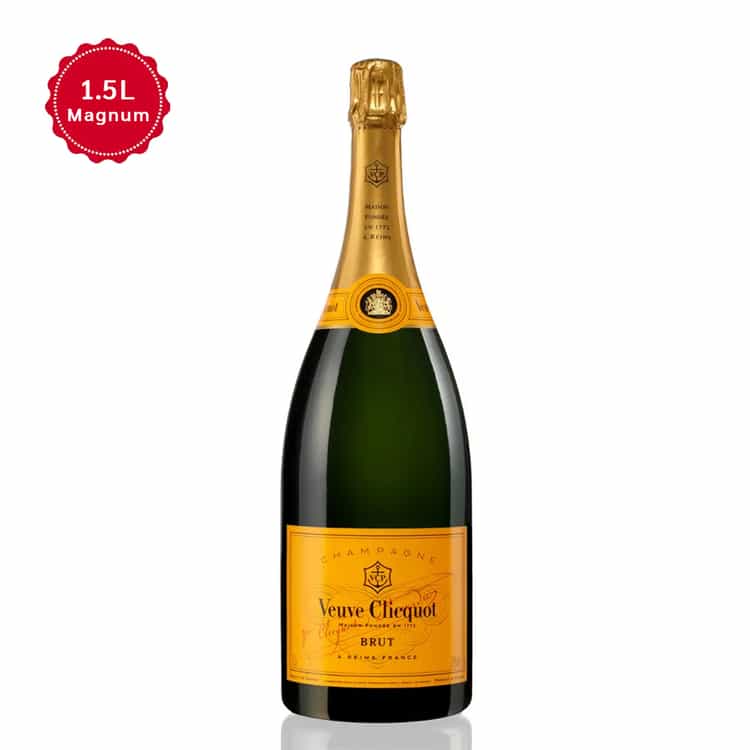
Brut · Bestseller
Veuve Clicquot Magnum Brut Champagne
The famous Yellow Label. Pinot Noir-led, rich and toasty, and instantly recognisable.
$229
Shop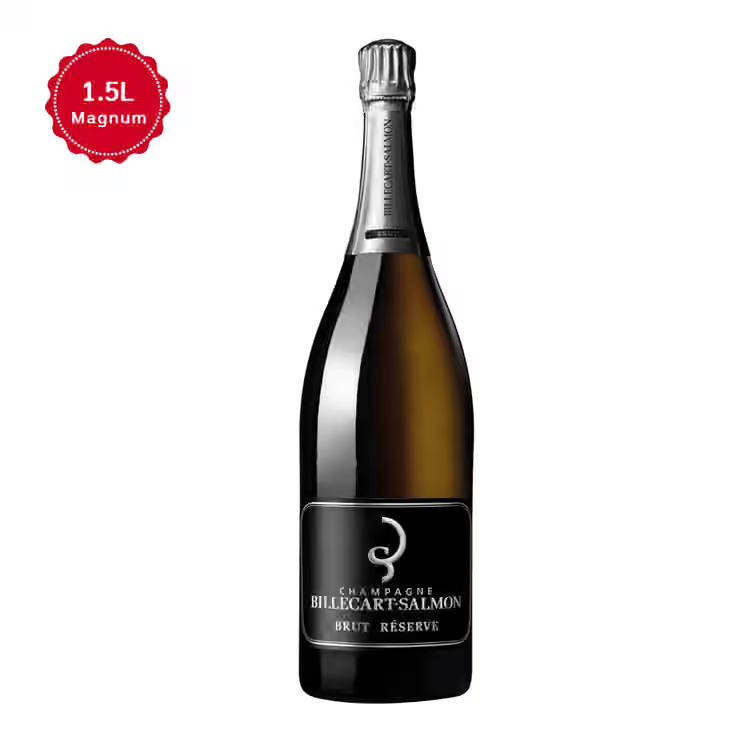
Brut · Sommelier's pick
Billecart-Salmon Brut Réserve Magnum
Fresh, precise and elegant. A favourite of wine lovers who know their champagne.
$199
Shop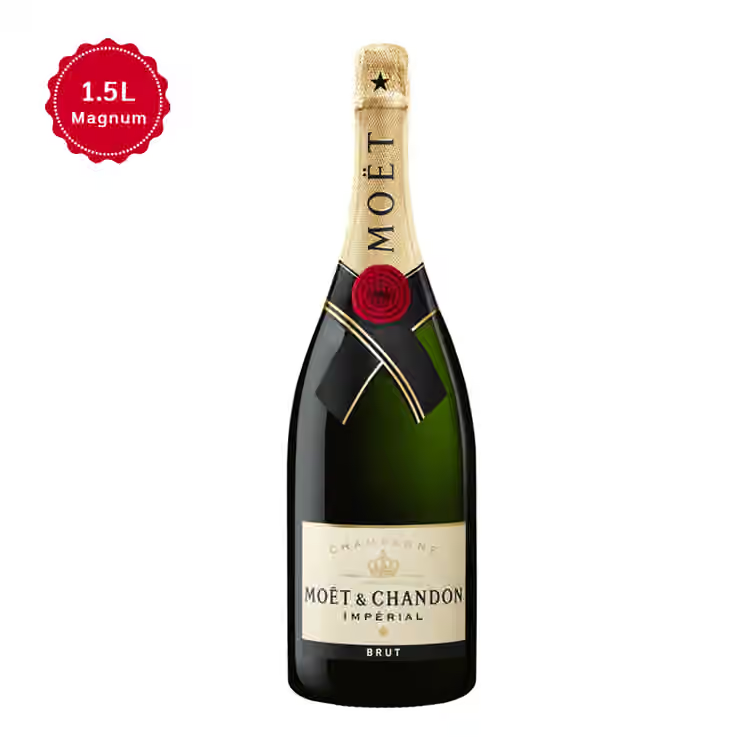
Brut · Party classic
Moët & Chandon Impérial Brut Magnum
The world's best-known champagne, bright and fruity. A magnum of Moët is a party icon.
$179
Shop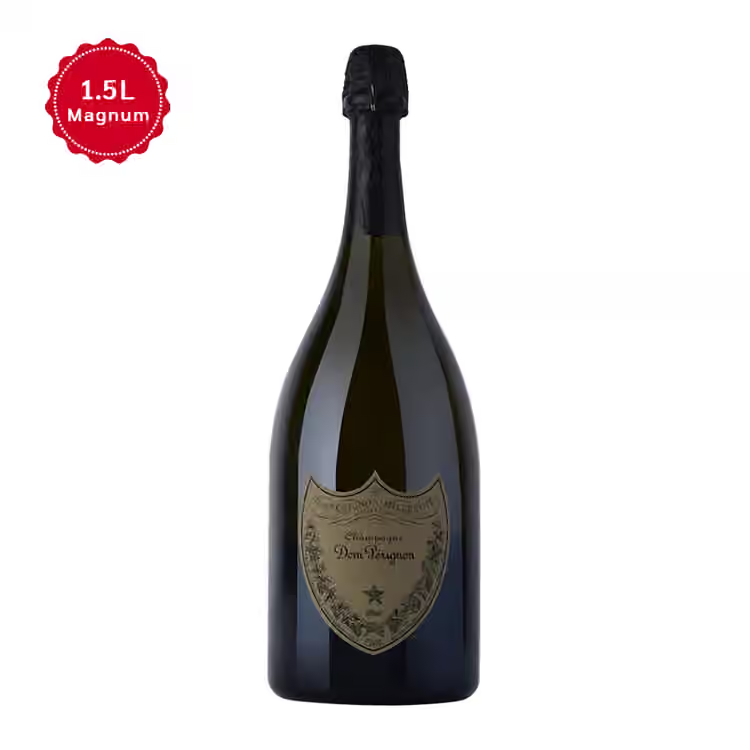
Vintage · Prestige
Dom Perignon Magnum Brut Champagne - 1.5L
Made only in great years and built to age. The magnum for once-in-a-lifetime moments.
$1049
Shop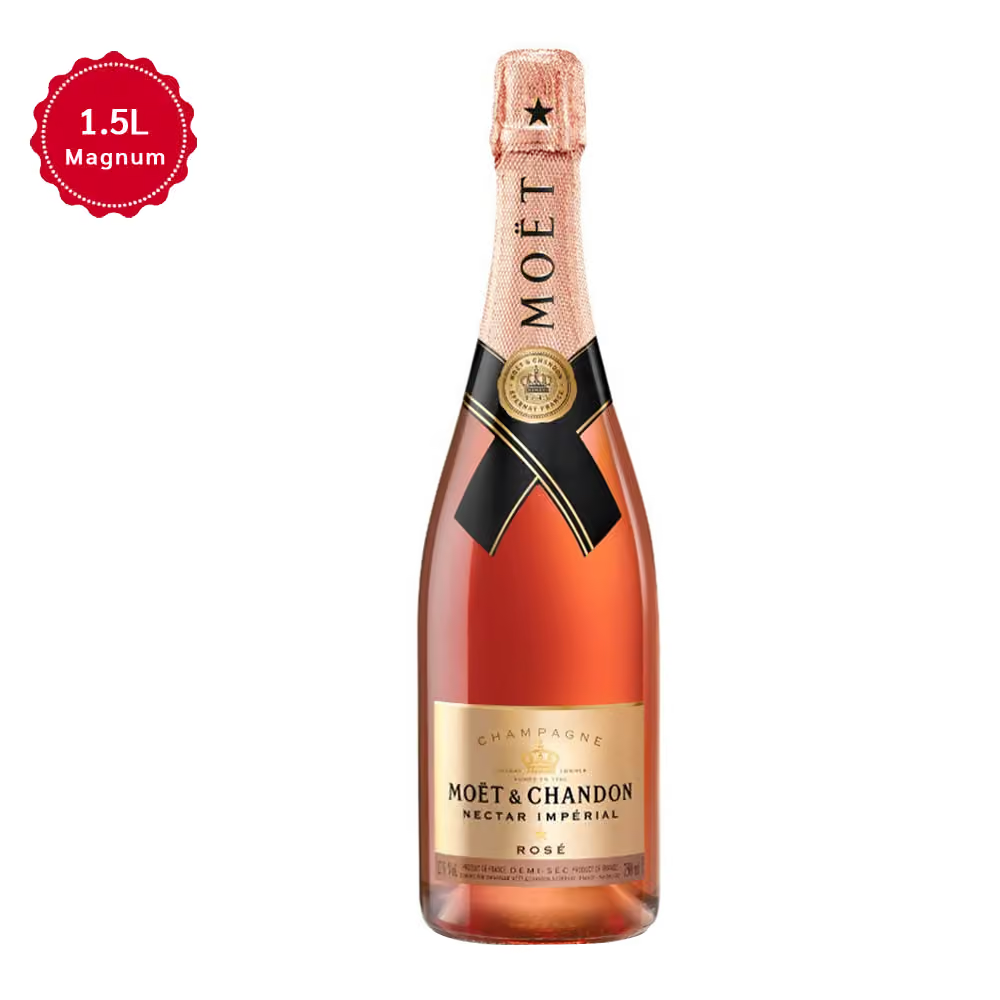
Rosé · Sweeter style
Moët & Chandon Nectar Impérial Rosé Luminous Magnum
A fruit-forward, gently sweet rosé in a bottle that glows. Made for parties and nightlife.
$149
Shop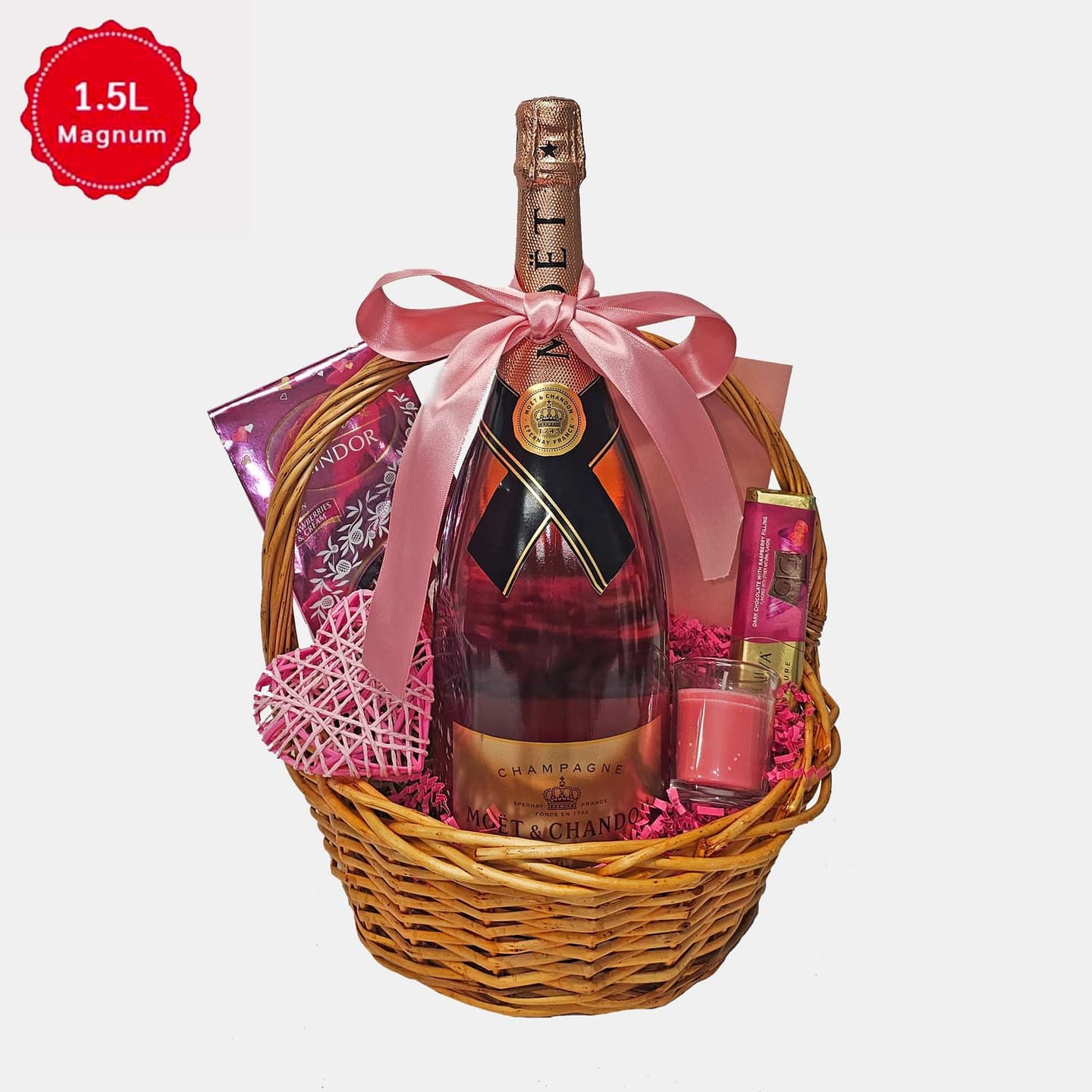
Rosé · Gift basket
Moët & Chandon Magnum Rosé Celebration Gift Basket
A rosé magnum dressed up and ready to hand over. Ideal for anniversaries and birthdays.
$199
ShopHow to choose the right champagne magnum
Choosing a big bottle of champagne comes down to three questions: who's drinking it, when will it be opened, and what do they like?
- Match the size to the crowd. Allow two glasses per guest for a party and one for a toast. For 4 to 6 people, choose a magnum. For 10 to 12, a Jeroboam or two magnums. For 20 or more, a Methuselah makes the moment.
- Pick the style.
- Brut non-vintage: the house signature, balanced and ready to drink.
- Extra Brut or Brut Nature: very dry and precise.
- Blanc de Blancs: 100% Chardonnay. Citrusy, mineral, elegant.
- Blanc de Noirs: Pinot Noir and Meunier. Rounder and richer, great with food.
- Rosé: the romantic pick for anniversaries and weddings.
- Vintage or prestige cuvée: made only in great years, and the style that benefits most from a magnum.
- Think about timing. Opening it this month? Go for a non-vintage brut or rosé. Opening it in ten years? Choose a vintage magnum and let the format do its work.
- Know the recipient. Big-brand lovers light up at a famous label. Wine enthusiasts often get more excited by a grower champagne from a small family estate.
- Order early. Large formats are made in small runs and often sell out before Christmas and New Year.
Champagne houses known for great magnums
| House | Why it's a great magnum gift |
|---|---|
| Moët & Chandon | The world's best-known champagne. Impérial and Rosé magnums are party icons. |
| Veuve Clicquot | The famous Yellow Label, with a rich Pinot-led style. |
| Billecart-Salmon | Precise and stylish, much loved by sommeliers. |
| Dom Pérignon | Vintage-only prestige champagne for once-in-a-lifetime moments. |
| Bollinger | Full-bodied and toasty, a favourite of serious champagne fans. |
| Pol Roger | Elegant and refined, with a long royal heritage. |
| Taittinger | Chardonnay-driven, fresh and graceful. |
| Laurent-Perrier | Its Cuvée Rosé is one of the best-loved rosé champagnes. |
| Ruinart | The oldest established champagne house, known for Blanc de Blancs. |
| Krug, Cristal | Prestige magnums for the very biggest celebrations. |
How much does a champagne magnum cost?
As a rough guide, a magnum costs the price of two standard bottles plus 10 to 20%. The extra covers the thicker glass, bigger cork, specialist handling and smaller production runs.
| Budget | What you get | From our collection |
|---|---|---|
| Under $100 | Prosecco and value sparkling | La Marca Prosecco Magnum, $89 |
| $100–$250 | Big-name non-vintage champagne and rosé | Moët Nectar Rosé $149 · Billecart-Salmon $199 · Moët Rosé Gift Basket $199 · Veuve Clicquot $229 |
| $250+ | Prestige cuvées, vintage champagne and cult wines | Dom Pérignon · Cakebread $279 · Opus One $1,499 |
Is a champagne magnum worth it?
Per glass, a magnum is rarely the cheapest way to buy champagne. What you're paying for is better ageing, finer bubbles and a gift that people photograph and remember. For a celebration, a crowd or a bottle meant for the cellar, it's worth every dollar.
How to serve a champagne magnum
A magnum rewards a little planning. It holds twice the wine, so it takes longer to chill and needs a steadier hand to pour.
| Chilling method | Time for a magnum |
|---|---|
| Refrigerator | 4–6 hours |
| Ice bucket with ice and water | 45–60 min |
| Ice bucket, ice only | 90 min + |
| Freezer | Not recommended for a pressurised bottle |
Serve non-vintage champagne at 8–10°C (46–50°F). Older vintage magnums show their complexity best slightly warmer, at 10–12°C (50–54°F). Use a large bucket so the bottle sits submerged up to the neck.
How to open and pour a magnum
- Dry the bottle completely so it can't slip.
- Remove the foil and untwist the cage (six half-turns) while keeping a thumb firmly on the cork.
- Hold the bottle at 45°, pointed away from people. Grip the cork and turn the bottle, not the cork.
- Ease it out slowly for a soft sigh rather than a loud pop. The sigh keeps more bubbles in the wine.
- To pour, put your thumb in the punt (the dimple in the base) and spread your fingers under the bottle, steadying the neck with your other hand.
- Pour in two stages: a splash first, then top up once the foam settles. Return the bottle to the ice between rounds.
Can you saber a champagne magnum?
Yes, and it's spectacular. Chill the bottle thoroughly, remove the foil and cage, find the vertical seam and slide a champagne saber firmly along it toward the lip. Always point it away from people, pets and windows. A magnum is heavier and less forgiving than a standard bottle, so practise on a 750 ml first.
What to eat with a magnum of champagne
- Brut and Blanc de Blancs: Oysters, sushi, smoked salmon, tempura, salted crisps, pakoras and samosas.
- Blanc de Noirs: Roast chicken, mushroom dishes, aged cheeses and buttery seafood.
- Rosé: Salmon, duck, tandoori dishes, charcuterie and berry desserts.
- Vintage and prestige: Truffle dishes, lobster, aged Comté or Parmesan.
How to store a champagne magnum
A magnum ages beautifully, but only if it's stored properly.
- Cool and steady: ideally 10–13°C (50–55°F), without big swings.
- Dark: light damages champagne, so keep it away from windows and bright bulbs.
- Still: away from vibration such as washing machines or a fridge motor.
- On its side for long-term storage so the cork stays moist. Upright is fine for a few weeks.
- Humid enough, around 70%, to stop the cork drying out.
Non-vintage magnums are best within 3 to 5 years of purchase. Vintage and prestige magnums can reward 10, 20 or even 30 years in a proper cellar.
Common mistakes to avoid with large-format champagne
- Under-chilling it. A warm magnum gushes foam and tastes flat.
- Underestimating the weight. Pouring one-handed from a full magnum invites spills.
- Buying too little. One magnum is about 12 glasses. If guests will want seconds, plan for it.
- Opening a great vintage too soon. If it's built to age, let it.
- Storing it upright on a sunny shelf. The quickest way to ruin a special bottle.
Fun facts about champagne magnums
- A Salmanazar is a whole case: Its 9 litres equal exactly 12 standard bottles, in one piece of glass.
- Giant bottles are filled from smaller ones: From about 4.5 litres up, champagne is usually made in smaller bottles and transferred under pressure.
- Magnums cost a little more per glass: Thicker glass, smaller runs and hand handling all add up.
- The sommelier's sweet spot: Big enough to age beautifully, small enough to chill and pour without help.
- Not just for big days: Some champagne lovers keep a "Magnum Friday" ritual. A big bottle turns any evening into an occasion.
- Fewer bottles, smoother party: One magnum instead of two bottles means fewer corks, fewer interruptions and a steadier temperature all night.
Champagne magnum FAQs
What is a champagne magnum?
A champagne magnum is a 1.5-litre bottle of champagne, double the standard 750 ml size. It pours about 12 glasses.
Is a magnum champagne?
A magnum is a bottle size, not a type of wine. Champagne is the wine most famously sold in magnums, but red, white and other sparkling wines come in magnums too.
How many bottles are in a magnum of champagne?
Two. A magnum holds the same as two standard 750 ml bottles of champagne.
How many bottles of champagne are in a double magnum?
Four. A double magnum, called a Jeroboam in Champagne, holds 3 litres and pours about 24 glasses.
How many glasses are in a magnum of champagne?
About 12 standard flutes, 10 generous pours, or up to 15 small toasting pours.
How many ounces are in a champagne magnum?
About 50.7 US fluid ounces (1,500 ml).
What is a large bottle of champagne called?
It depends on the size: Magnum (1.5 L), Jeroboam or double magnum (3 L), Rehoboam (4.5 L), Methuselah (6 L), Salmanazar (9 L), Balthazar (12 L), Nebuchadnezzar (15 L), Solomon (18 L) and Melchizedek (30 L).
What is the biggest champagne bottle?
The Melchizedek, also called a Midas, holds 30 litres: 40 standard bottles or roughly 240 glasses. It's extremely rare and usually made to order.
Does champagne age better in a magnum?
Yes. The air under the cork is spread over twice as much wine, so the champagne ages more slowly and keeps its freshness and fine bubbles longer.
How long does it take to chill a champagne magnum?
About 45 to 60 minutes in an ice bucket with ice and water, or 4 to 6 hours in the fridge.
How much does a champagne magnum cost?
Usually around the price of two standard bottles plus 10 to 20%. Our champagne magnums start at $149, with prosecco magnums from $89.
Is a champagne magnum a good gift?
Yes, one of the best. It's generous, ages well, looks spectacular and is made to be shared, which makes it ideal for weddings, anniversaries, milestone birthdays and corporate gifting.
How long does a magnum last once opened?
Sealed with a proper champagne stopper in the fridge, about 2 to 3 days, though the bubbles fade a little each day.