Quick Answer
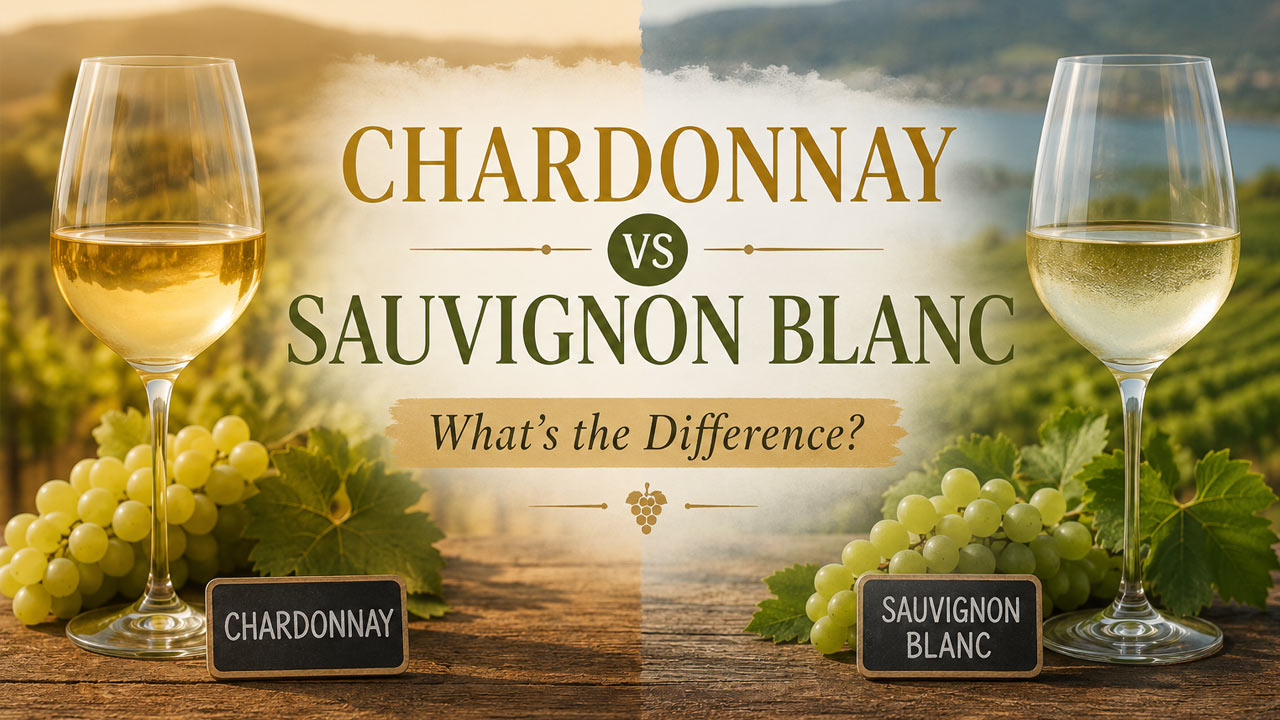
Chardonnay is the more versatile grape, ranging from lean and citrusy to rich, buttery and oak-aged, while Sauvignon Blanc is prized for its high acidity, citrus and herbaceous character, and refreshing style. Choose Chardonnay for creamy, food-friendly richness, and Sauvignon Blanc for crisp, zesty freshness.
In This Guide
- Chardonnay vs Sauvignon Blanc: At a Glance
- Quick Glossary
- What Is Chardonnay?
- What Is Sauvignon Blanc?
- What Is Fumé Blanc? Oaked Sauvignon Blanc Explained
- Flavour Differences
- Where Do These Grapes Come From?
- Alcohol Content and Aging Potential
- Storage and Shelf Life
- How to Choose Between the Two
- Wine Gift Ideas
- Final Pour
- Key Takeaways
- FAQs
Chardonnay and Sauvignon Blanc are two of the world's most popular white wine grapes, but they can produce very different styles of wine. While Chardonnay can range from crisp and mineral-driven to rich, buttery and creamy, Sauvignon Blanc is best known for its high acidity, citrusy flavors and distinctive herbaceous character.
So, which one should you choose? The answer depends on your preferred wine body, acidity, flavour profile, winemaking style and food pairing.
Chardonnay vs Sauvignon Blanc: At a Glance
| Characteristic | Chardonnay | Sauvignon Blanc |
|---|---|---|
| Wine body | Light-bodied to full-bodied | Usually light-bodied to medium-bodied |
| Acidity | Medium to high | High |
| Typical flavours | Green apple, pear, citrus, stone fruit, tropical fruit | Lime, grapefruit, gooseberry, passion fruit, green apple |
| Herbal character | Usually subtle | Often pronounced |
| Texture | Can be creamy, round and rich | Usually crisp and refreshing |
| Oak influence | Common in some styles | Less common, but increasingly used |
| Malolactic fermentation | Common, especially in richer styles | Usually avoided |
| Sweetness | Usually dry | Usually dry |
| Tannin | Very low | Very low |
| Classic regions | Burgundy, Chablis, Napa Valley, Sonoma | Loire Valley, Bordeaux, Marlborough, Adelaide Hills |
| Best known for | Versatility and range of styles | Freshness, acidity and aromatic character |
Quick Glossary
What Is Chardonnay?
Chardonnay is a versatile white wine grape that can produce everything from elegant, lean wines with mineral notes to rich, full-bodied wines with a buttery, creamy texture.
Its natural flavour profile is quite neutral compared to more aromatic varieties. This makes Chardonnay particularly expressive to the growing environment and winemaking techniques.
In cooler climates, Chardonnay can show flavours of green apple, lemon and lime, with high acidity and mineral notes. Warmer climates can bring riper stone and tropical fruit flavours. One of Chardonnay's greatest strengths is its ability to take on the character of its winemaking and make delicious food and wine pairings.
Oak-Aged Chardonnay
Warm climate Chardonnay possesses character and depth, both of which make it capable of taking on different winemaking options. Oak aging can introduce flavours and aromas such as vanilla, toast, spice and baking notes. It can also contribute to a richer mouthfeel.
Malolactic fermentation is another technique commonly used on Chardonnay. This process converts sharp, tart malic acid into softer lactic acid, creating a rounder, smoother and sometimes distinctly buttery or creamy texture.
Classic, textured, and more tropical examples can be found in Burgundy, while Chablis is famous for a more restrained, high-acid and mineral-driven expression of Chardonnay.
Outside France, California Chardonnay wines are known to range in styles, from fresh and unoaked to rich, oak-influenced wines.
What Is Sauvignon Blanc?
Sauvignon Blanc is a white grape, generally recognized for its high acidity, freshness, floral, and herbal aromas. It typically produces light-bodied to medium-bodied wines with flavours ranging from citrus and green fruit to tropical and distinctly herbaceous notes.
Depending on climate and ripeness level of grapes, you may find aromas and flavours of:
- Lime
- Grapefruit
- Green apple
- Gooseberry
- Passion fruit
- Fresh herbs
- Grass
- Bell pepper
- Citrus
Sauvignon Blanc's signature herbaceous character is particularly noticeable in cooler climates. Some of the best Sauvignon Blanc wines are from:
- Marlborough in New Zealand, for example, is famous for intensely aromatic Sauvignon Blanc with pronounced citrus, passion fruit and herbaceous notes, and a distinctively pungent flavour.
- The Loire Valley, particularly Sancerre, produces a more restrained and mineral-driven style, often showing citrus, green fruit and mineral notes.
- Sauvignon Blanc is also an important variety in Bordeaux, where it may be blended with Semillon.
What Is Fumé Blanc? Oaked Sauvignon Blanc Explained
While most Sauvignon Blanc is made in stainless steel to preserve its fresh, zesty character, some producers age it in oak barrels for extra texture and complexity. This style is often labelled Fumé Blanc, a name popularised in California, though oak-aged versions also appear in white Bordeaux and select Sancerre bottlings.
Oak-aged Sauvignon Blanc trades a little of its signature crispness for a rounder mouthfeel and subtle notes of vanilla, toast or smoke, while still keeping its core citrus and herbal identity. It is a good pick for someone who loves Sauvignon Blanc's freshness but also enjoys the texture Chardonnay drinkers appreciate.
Chardonnay vs Sauvignon Blanc: Flavour Differences
The easiest way to distinguish the two and choose the best wines from Sauvignon Blanc and Chardonnay, is to think about texture versus freshness. Chardonnay can be relatively neutral and its character is strongly influenced by climate, grape growing, and winemaking. It may taste lean and citrusy or rich, creamy and buttery. Sauvignon Blanc is generally more aromatic. Its combination of high acidity and distinctive fruit and herbaceous aromas gives it a particularly fresh and energetic personality.
| Characteristic | Chardonnay | Sauvignon Blanc |
|---|---|---|
| Wine body | Light-bodied to full-bodied, depending on style | Usually light-bodied to medium-bodied |
| Acidity | Medium to high | High |
| Typical flavour profile | Green apple, lemon, pear, stone fruit, tropical fruit | Lime, grapefruit, gooseberry, green apple, passion fruit |
| Aromatic character | Relatively neutral; strongly influenced by climate and winemaking | Highly aromatic and expressive |
| Herbaceous character | Generally subtle | Often pronounced; grassy, herbal, bell pepper notes |
| Texture / mouthfeel | Can be crisp, round, rich, buttery and creamy | Usually crisp, lean and refreshing |
| Oak aging | Common, especially in fuller-bodied styles | Less common; some premium styles may use oak |
| Sweetness | Usually dry | Usually dry |
| Mineral character | Can show pronounced mineral notes, especially in cool-climate styles | Can show mineral notes, particularly in Loire Valley styles |
| Classic French regions | Burgundy, Chablis | Loire Valley, Sancerre, Bordeaux |
| Other important regions | Napa Valley, Sonoma, Casablanca Valley, Yarra Valley | Marlborough, Adelaide Hills, Casablanca Valley |
| Best food pairings | Roast chicken, grilled fish, lobster, crab, creamy pasta, soft cheeses | Goat cheese, oysters, sushi, seafood, salads, grilled vegetables, herb-driven dishes |
| Serving temperature | Around 9 to 13°C, depending on style | Around 8 to 10°C |
| Wine glass | Medium to larger white wine glass, especially for richer styles | Slightly narrower white wine glass to concentrate aromas |
Where Do Chardonnay and Sauvignon Blanc Come From?
Both grapes have French roots, though from different regions. Chardonnay originated in Burgundy, in eastern France, and is a genetic cross of Pinot Noir and the now-obscure Gouais Blanc. Sauvignon Blanc's homeland is generally traced to the Loire Valley and Bordeaux in western France, and it shares a genetic link with Cabernet Sauvignon, which is itself a natural cross of Sauvignon Blanc and Cabernet Franc.
This shared heritage explains why Sauvignon Blanc sometimes shows a faint green, herbal streak similar to Cabernet Franc, while Chardonnay's neutral flavour base is part of what makes it so adaptable to different soils, climates and cellar techniques around the world.
Alcohol Content and Aging Potential
Alcohol levels in both wines typically fall in a similar range, usually around 12.5% to 14.5% ABV, though warmer-climate examples of either grape can run higher. Chardonnay grown in warm regions, such as parts of California or Australia, can occasionally reach 14.5% or more, while cooler-climate Sauvignon Blanc, like classic Sancerre, tends to sit toward the lower end of that range.
Aging potential is where the two diverge more clearly. Age-worthy, oak-influenced Chardonnay from top producers in Burgundy or California can develop beautifully for five to ten years or longer, gaining nutty, honeyed and toasty complexity. Sauvignon Blanc is generally made for early drinking, with most bottles best enjoyed within one to three years of release to preserve their vibrant fruit and herbal lift. A handful of structured, barrel-aged styles from Bordeaux or Sancerre are the exception, and can reward a few extra years in the cellar.
Storage and Shelf Life: How Long Do They Last Once Opened?
Both wines are best stored in a cool, dark place before opening, ideally around 12 to 14°C. Once you have opened the bottle, an airtight recork and refrigeration will keep either wine tasting fresh for a limited window.
Chardonnay generally holds up for three to five days in the fridge after opening, with richer, oaked styles sometimes lasting a touch longer thanks to their fuller structure. Sauvignon Blanc is more delicate and is best finished within three to four days, since its bright acidity and aromatics fade faster once exposed to air.
A vacuum wine stopper or inert gas spray can extend either wine's freshness by a day or two. And if you are ever wondering whether the freezer is a shortcut for rapid chilling, it is worth understanding how long it takes wine to freeze before you try it, since freezing affects the wine's texture and can even crack the bottle.
How to Choose Between Chardonnay and Sauvignon Blanc
Still not sure which bottle to reach for? Use this quick guide based on the occasion:
- Hosting a dinner party with creamy pasta or roast chicken: choose an oaked Chardonnay for a rich, food-friendly match.
- Summer BBQ, salads or seafood: choose Sauvignon Blanc for its crisp, refreshing acidity.
- Date night with oysters or sushi: choose Sauvignon Blanc, particularly a Sancerre or Marlborough style.
- Cosy evening with soft cheese or lobster: choose a Burgundy-style Chardonnay for its round, buttery texture.
- New to wine and want something easy to enjoy: start with an unoaked Chardonnay or a classic New Zealand Sauvignon Blanc.
- Gifting for someone whose taste you don't know: Chardonnay is the safer, more universally appealing choice.
Sauvignon Blanc & Chardonnay: Wine Gift Ideas
Sauvignon Blanc wine gift could be the perfect summer wine present, or great anytime of the year when you want to choose a food friendly and an elegant wine gift.
Chardonnay wine gifts are a no-fail, classic choice. The grape's changing personality offers wine styles that have something to appeal to all palates alike.
Final Pour: Chardonnay vs Sauvignon Blanc
Chardonnay and Sauvignon Blanc may both be popular white wine grapes, but they offer very different experiences.
Chardonnay is the shape-shifter. It can be lean, mineral and citrusy or rich, buttery and full-bodied depending on its climate, terroir (growing environment) and winemaking.
Sauvignon Blanc is the freshness champion. Vibrant acidity, expressive aromas and a distinctive citrusy, herbaceous personality are its calling cards.
If you're new to wine, tasting the two side by side is one of the easiest ways to understand how grape variety, climate, terroir and winemaking influence the wine in your glass. And ultimately, there is no "better" grape. If you like crisp and zesty, reach for Sauvignon Blanc. If you like creamy and complex, reach for Chardonnay.
Key Takeaways
- Chardonnay is the versatile, shape-shifting grape: lean and mineral or rich, buttery and oak-aged.
- Sauvignon Blanc is the freshness champion: high acidity, citrus and herbaceous character.
- Both are typically dry wines with similar alcohol ranges, roughly 12.5% to 14.5% ABV.
- Oaked Chardonnay can age for years; Sauvignon Blanc is best enjoyed young, within one to three years.
- Once opened, Chardonnay lasts three to five days chilled and Sauvignon Blanc three to four days.
- There is no universally "better" grape. Match the wine to the occasion, food and your personal taste.
Frequently Asked Questions
1. Is Chardonnay or Sauvignon Blanc sweeter?
Neither grape is naturally sweet. The vast majority of Chardonnay and Sauvignon Blanc wines are made in a dry style. Any perceived sweetness in Chardonnay usually comes from ripe fruit character or oak-derived vanilla notes rather than residual sugar, while Sauvignon Blanc's ripe tropical fruit can also read as sweetness even though the wine is technically dry.
2. Which has more alcohol, Chardonnay or Sauvignon Blanc?
Both typically range from around 12.5% to 14.5% ABV. Warm-climate Chardonnay tends to sit at the higher end of that range because riper grapes produce more alcohol, while cooler-climate Sauvignon Blanc, such as classic Sancerre or Marlborough styles, is often a touch lighter.
3. Which wine is better for a beginner?
Sauvignon Blanc is often an easier entry point because its bright, fruity and herbal character is immediate and easy to identify. Chardonnay is a great next step once you want to explore how climate, oak and winemaking can completely change a wine's personality.
4. Can Chardonnay and Sauvignon Blanc be blended together?
They are not commonly blended with each other, since their flavour profiles work better as contrasts than as a blend. Sauvignon Blanc is more frequently blended with Semillon, especially in Bordeaux, while Chardonnay is usually bottled as a single varietal wine or used as a base for sparkling wine.
5. Which wine ages better, Chardonnay or Sauvignon Blanc?
Age-worthy, often oak-aged Chardonnay from top regions can develop for five to ten years or more, gaining nutty and honeyed complexity. Sauvignon Blanc is generally made to be enjoyed young, within one to three years of release, so its fresh acidity and aromatics stay at their best.
6. Are Chardonnay and Sauvignon Blanc related grapes?
Chardonnay is a cross of Pinot Noir and Gouais Blanc, while Sauvignon Blanc is a parent grape of Cabernet Sauvignon. They are not directly related to each other, which is part of why they taste so different in the glass.
7. What is the best food pairing for each wine?
Chardonnay pairs well with roast chicken, grilled fish, lobster, crab, creamy pasta and soft cheeses, especially in its richer, oaked styles. Sauvignon Blanc is a natural match for goat cheese, oysters, sushi, seafood, salads and herb-driven dishes, thanks to its high acidity and herbaceous notes.
8. Is all Chardonnay Oaked?
No. Chardonnay is made in both oaked and unoaked styles. Unoaked Chardonnay, such as many wines from Chablis, tends to be leaner, crisper and more mineral-driven, while oaked styles bring vanilla, toast and a rounder, creamier texture.
9. Which is more popular, Chardonnay or Sauvignon Blanc?
Chardonnay is generally considered the most widely planted and consumed white wine grape in the world, thanks to its adaptability to many climates and winemaking styles. Sauvignon Blanc is close behind and has a devoted following, particularly for its zesty, aromatic character.
10. What is the best serving temperature for Chardonnay and Sauvignon Blanc?
Chardonnay is best served around 9 to 13°C, with richer, oaked styles served slightly warmer to show off their texture. Sauvignon Blanc is best served a little cooler, around 8 to 10°C, to keep its acidity crisp and its aromatics fresh.