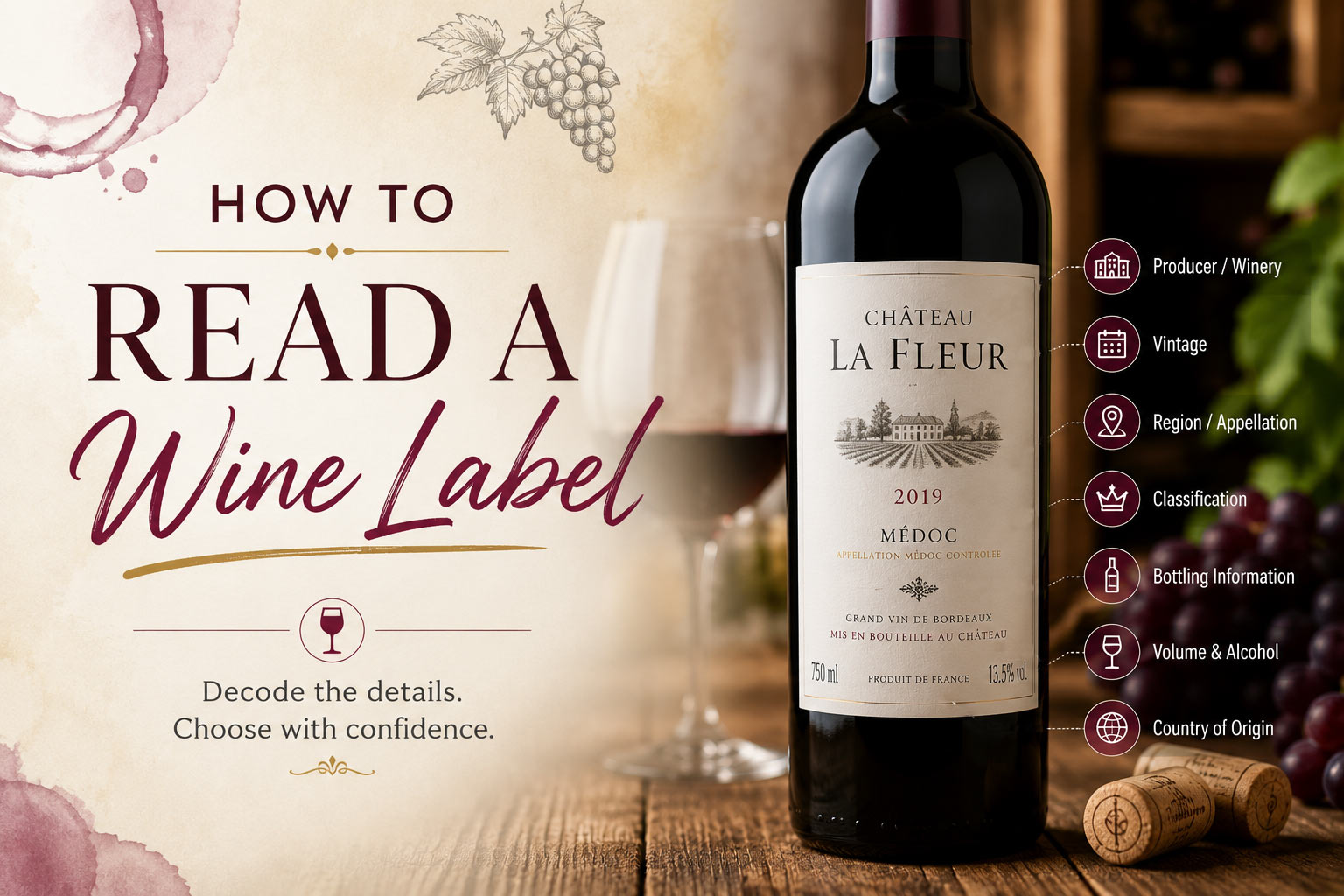
Have you ever picked up a wine bottle and felt confused by the information on the label? Names of regions, grapes, vintage years, and unfamiliar French terms can make wine seem complicated. The good news is that a wine label actually gives you many clues about what is inside the bottle. Once you understand what each part means, choosing a wine becomes much easier.
First, Understand What Is Wine
Before learning how to read a wine label, it helps to understand what wine actually is. Wine is an alcoholic beverage made through the fermentation of grapes. During fermentation, yeast converts the natural sugar present in grapes into alcohol. However, wine is not only about the grape. It is also influenced by where the grapes are grown, the climate of the region, the winemaking process, and the aging techniques used by the producer. This is why there are different types of wine - from red to sparkling, each having their own structure and flavor profile.
The Important Things You Will Find on a Wine Label
Producer or Winery Name
Region or Place of Origin
- Wines from cooler regions often have higher acidity and fresher flavors.
- Wines from warmer regions usually have riper fruit flavors and higher alcohol levels, as they have more sugar accumulation in the grapes.
Grape Variety
- Cabernet Sauvignon generally produces wines with deeper color, stronger tannins, and flavors of black fruits.
- Pinot Noir usually creates lighter-bodied wines with red fruit flavors and earthy complexity.
- Chardonnay white wines can range from fresh and citrus-driven to rich and buttery depending on where and how they are made.
- Sauvignon Blanc is often known for fresh acidity and herbal or citrus flavors.
The producer's name tells you who made the wine. It could be a large wine company, a family-owned estate, or an individual winemaker. In many wine regions, the reputation of the producer plays an important role because experienced, well-regarded producers often have a consistent style and quality of wine.
The region tells you where the grapes were grown and often gives you an idea about the style of the wine. Climate, soil, and winemaking techniques influence the final style of the wine. For example:
Famous wine regions after which the wines are named include Bordeaux and Burgundy, known for Cabernet Sauvignon and Merlot blends and for Chardonnay and Pinot Noir, respectively; and Napa Valley, recognized worldwide for Cabernet Sauvignon.
The grape variety name on the wine label tells you what type of grape has been used to make the wine. For beginners, understanding a few popular grapes can make wine selection much easier. Some common examples are:
What Is the 75-85-95 Rule in Wine Labels?
The 75-85-95 rule is a simple way to understand some common wine labeling regulations. However, remember that wine laws differ from country to country; therefore, this rule is okay for general understanding only.
The 75% Rule - In many wine-producing countries, if a grape variety is mentioned on the label, the wine must contain a minimum percentage of that grape.
For example, a bottle labeled Chardonnay generally contains at least 75% Chardonnay grapes, although the exact requirement depends on the wine’s region of origin. The 85% Rule—When a vintage year is mentioned on a wine label, many regions require that all or a large majority of the grapes must come from that particular year. For example, a bottle of vintage Champagne labeled 2022 indicates that all of the champagne grapes used for that wine were harvested in 2022. The 95% Rule - The 95% rule is used in certain wine regions and classifications where stricter requirements apply. It may refer to the percentage of grapes coming from a specific vineyard, region, or vintage, depending on local wine laws.
How to Read a French Wine Label
French wine labels often confuse wine beginners because the focus is on the place of origin rather than the grape variety. The key to understanding French wine labels is knowing the region, understanding the allowed grape varieties, and then understanding the wine style.
For example: Bordeaux Wine Label - Château Margaux, 2019. This tells you:
- Château refers to the estate or producer.
- Margaux is the appellation or designated wine region.
- 2019 is the vintage year.
The grape variety will not be mentioned on higher-quality wines from most French regions because wine laws already define which grapes are traditionally permitted in that region.
For example: Burgundy Wine Label - Domaine Chablis Premier Cru 2022. This means:
- Domaine refers to the producer or estate.
- Chablis is the wine region.
- Premier Cru indicates a higher-quality vineyard classification.
- 2022 represents the harvest year.
The grape of Burgundy is typically Chardonnay, even though it may not appear on the label.
Important French Wine Terms to Know
- Domaine refers to a wine estate or producer, especially commonly used in Burgundy
- Château means a wine estate and does not always mean there is an actual castle.
- Cru refers to a recognized vineyard or quality classification.
- Grand Cru represents a top classification in certain French regions.
- Premier Cru indicates a high-ranking classification below Grand Cru in many regions.
- Vieilles Vignes means old vines.
- Mis en bouteille au château/domaine means the wine was bottled on the estate.
How to Understand Wine Style From a Label
A wine label may not always clearly state whether a wine is sweet, dry, light, or full-bodied, but certain words can provide the exact information on what the style of that wine is.
For sparkling wines:
- Brut usually indicates a dry style
- Demi-Sec indicates a sweeter style
For French wines:
- Sec means dry
- Moelleux indicates a softer, sweeter style
The alcohol percentage also gives a clue about the wine’s body—how light or full it will taste on the palate. A wine around 11-12% alcohol is often lighter and fresher, while wines above 14% alcohol are generally fuller and richer.
Popular Wine Labels & Styles Beginners Should Know
Many old-world wine labels mention the region instead of the grape variety, while the new-world wine labels often highlight the grape name. We’ve put together some of the most recognized wine labels that you should surely know about.
| Wine Label / Region | Country | Main Grape(s) | Wine Style & What to Expect | Why It Is Popular |
|---|---|---|---|---|
| Bordeaux | France | Cabernet Sauvignon, Merlot, Cabernet Franc | Usually a structured red wine with tannins, black fruit flavours, and good ageing potential | One of the world’s most famous wine regions, known for premium red blends |
| Burgundy (Bourgogne) | France | Pinot Noir, Chardonnay | Elegant, refined wines with a strong expression of place. Red Burgundy is Pinot Noir; white Burgundy is Chardonnay | Considered one of the greatest wine regions for terroir-driven wines |
| Champagne | France | Chardonnay, Pinot Noir, Pinot Meunier | Sparkling wines ranging from fresh and crisp to complex and aged | The most famous sparkling wine region in the world |
| Chablis | France | Chardonnay | Dry, mineral-driven white wines with high acidity and citrus flavours | A beginner-friendly introduction to French Chardonnay |
| Sancerre | France | Sauvignon Blanc | Fresh, crisp white wines with citrus, herbal notes, and bright acidity | One of the most searched and recognised Sauvignon Blanc regions |
| Barolo | Italy | Nebbiolo | Powerful red wine with high tannins, acidity, and flavours of cherry, rose, and spice | Known as the “King of Wines” and one of Italy’s most prestigious wines |
| Chianti | Italy | Sangiovese | Medium-bodied red wine with cherry flavours, acidity, and earthy notes | One of the most recognisable Italian wine labels globally |
| Rioja | Spain | Tempranillo | Smooth red wines with red fruit, vanilla, spice, and oak flavours | Spain’s most famous and approachable red wine region |
| Napa Valley, Cabernet Sauvignon | USA (California) | Cabernet Sauvignon | Full-bodied wines with ripe fruit flavours, richness, and higher alcohol | One of the world’s most famous New World wine regions |
| Marlborough, Sauvignon Blanc | New Zealand | Sauvignon Blanc | Fresh, aromatic wines with tropical fruit, citrus, and herbal flavours | Made Sauvignon Blanc one of the most popular white wine styles worldwide |
| Barossa, Valley Shiraz | Australia | Shiraz/Syrah | Full-bodied reds with dark fruit, spice, and richness | Australia’s most recognised red wine style |
| Mosel, Riesling | Germany | Riesling | Aromatic wines ranging from dry to sweet, with high acidity and floral notes | Famous for elegant and age-worthy white wines |
Quick Tip: How to Read These Labels
- Bordeaux, Burgundy, Champagne, Chablis, Sancerre - These labels usually highlight the place, and you need to know the grapes associated with that region.
- Napa Cabernet Sauvignon, Marlborough Sauvignon Blanc, Barossa Shiraz - These labels often highlight the grape variety, making them easier to understand for beginners.
- Italian DOC/DOCG wines - Understanding the region name helps you understand the style because the grape may not always be mentioned.
A Simple Wine Label Checklist
Before buying a bottle, look for these details on the wine label:
- Producer - Who made the wine?
- Region - Where does the wine come from?
- Grape - What variety has been used?
- Vintage - Which year were the grapes harvested?
- Alcohol - What is the approximate style and body?
- Your preference - Do you enjoy fresh, fruity, bold, or elegant wines?
Final Thoughts
A wine label is not meant to confuse or intimidate you. It is a guide that tells the story of the wine inside the bottle. You do not need to memorise every wine region or fancy French term immediately. Start by understanding a few grapes, regions, and basic label words. With every wine label you read, your confidence grows, and choosing wine becomes a much more enjoyable experience.