You took a sip of a red wine and after the wine left your palate, your mouth suddenly felt dry, your gums tightened slightly, and your tongue felt as though it had lost some of its usual softness. This sensation is often described as the "grip" of a wine.
That mouth-drying feeling or sensation comes from tannins - one of the most fascinating and misunderstood elements in wine.
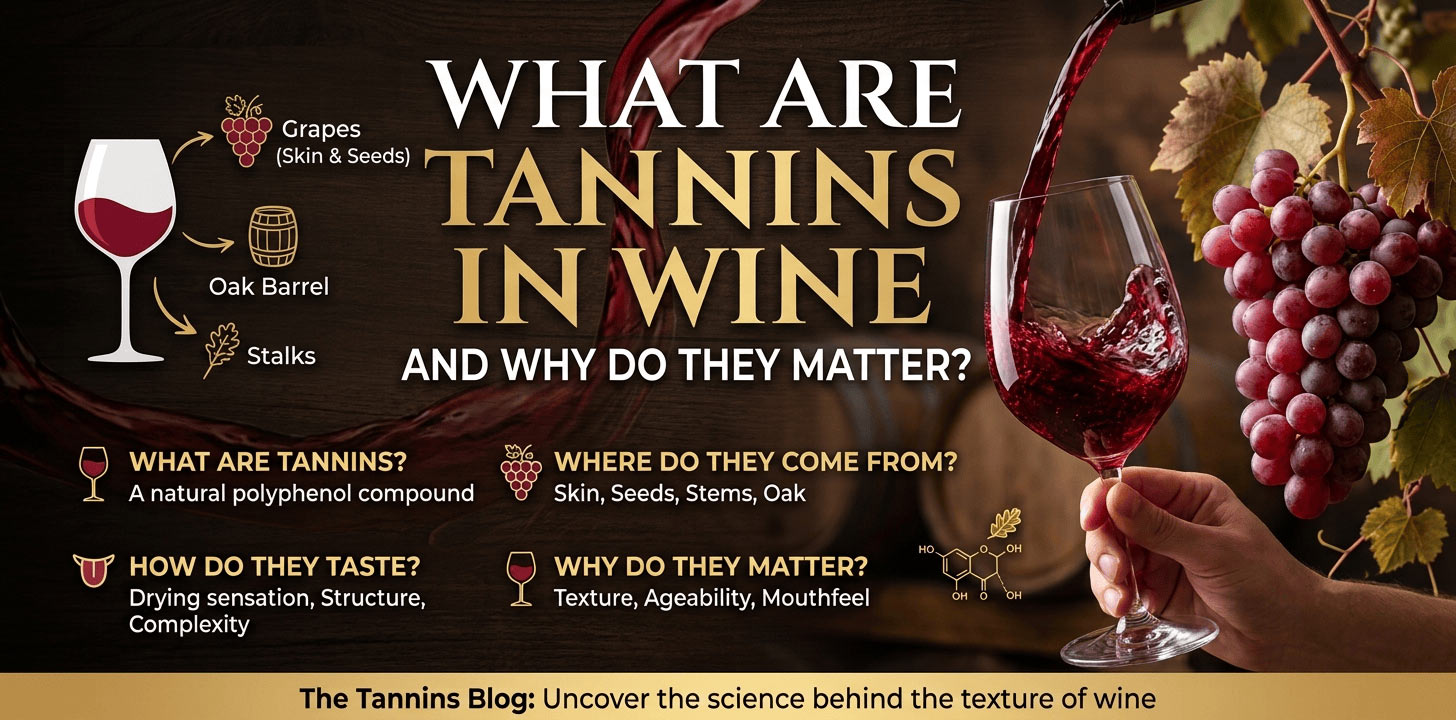
If you're a beginner in wine drinking, tannins can seem harsh or bitter, something that makes the wine feel too strong. Tannins are found in the skins of black grape varieties in varying degrees, hence all red wines have tannins ranging from low to high levels. Red or white wines aged in new oak barrels can also absorb tannins, as they're naturally present in the oak wood.
Tannins are far more than just a sensation. They are the backbone of many great wines, giving them shape, texture, ageing ability, and a sense of balance.
A red wine without tannins can sometimes feel flat or watery and lacking in structure, while a wine with well-integrated, high tannins can feel elegant, complex, and beautifully composed on the palate.
So, what exactly are tannins, and why do they matter so much in wine?
The Tannins Blog Uncovers:
- What Are Tannins?
- What Are Tannins In Wine?
- What Is A Wine Tannin?
- What Are Tannins In Red Wine?
- What Does Tannin Taste Like?
- What Does Tannic Mean In Wine?
- What Do Tannins Do In Wine?
- What Causes Tannins In Wine?
- Which Wine Has The Most Tannins?
- What Red Wine Has The Least Tannins?
- What Is Wine Tannin Used For?
What Are Tannins?
Tannins are naturally occurring compounds called polyphenols that are found in plants. They act as a natural defence mechanism for the fruit, creating bitterness and astringency that discourage animals from eating them. Tannins have a natural tendency to bind with proteins wherever they find them.
The word "tannin" comes from the process of tanning leather, where plant tannins were traditionally used to transform animal hides into leather by binding with proteins.
In simple terms, tannin is a plant compound that creates a drying, puckering sensation when it interacts with proteins in our saliva. As tannins go and bind with that saliva protein, it dries up and the mouth feels that drying sensation for a while.
Tannins are present mainly in the skins of black grape varieties and many everyday foods and drinks like:
- Tea and coffee leaves - the dry mouth feeling that happens after having a strong black tea
- Cocoa
- Nuts
- Dark chocolate
- Certain fruits like black plum — which have a high amount of tannins in the skin
- Oak wood — tannins from oak get transferred to wine as it ages in oak barrels
What Are Tannins In Wine?
Wine tannins come mainly from grape skins, seeds, and stems. For red winemaking, grape skins and juice are in contact during fermentation, allowing the tannins, along with colour and flavours, to come into the final wine.
Oak ageing can also contribute to tannins. When red wine or white wine is aged in oak barrels, it absorbs tannins from the wood, adding another layer of structure and complexity.
Some white grape varieties may contain tannins but in much lower amounts than black grapes. White wines are usually fermented after separating the skins from the juice, so there is no significant presence of tannins, unless a small amount gets absorbed from oak barrel ageing. Therefore, tannins are typically not considered a factor in white wines.
What Is A Wine Tannin?
A wine tannin is essentially the compound that creates the varying levels of drying sensation we experience while tasting red wines.
Unlike acidity in wine, which makes your mouth water, tannins create a sensation of dryness because they bind with proteins in saliva. This reduces the lubrication in your mouth, leaving behind that friction-like, rough or grippy feeling.
A useful way to understand this difference:
- Acidity makes you salivate
- Tannins make your mouth feel dry
Both are important structural elements in wine, but they work in completely different ways.
What Are Tannins In Red Wine?
Red wines usually contain much higher tannin levels than white wines. For red wine production, grape skins stay in contact with the fermenting juice for several days or even weeks. Since grape skins contain colour pigments and tannins, the red wine extracts both during this process.
This is why wines made from thick-skinned black grape varieties often have more tannins.
Examples of red wines naturally high in tannins include:
- Cabernet Sauvignon
- Nebbiolo
- Tannat
- Petite Sirah
- Sangiovese
- Tempranillo
Premium and high-quality wines from these grape varieties often have the ability to age for many years because tannins act as natural preservatives, giving the much-needed backbone to wines as they evolve with bottle ageing. More simple, easy-drinking table wines often have a lighter texture with lower tannins.
What Does Tannin Taste Like?
Interestingly, tannins do not really have a flavour in the same way sugar or other common wine notes do. Instead, tannins are experienced through texture and mouth-drying sensation.
A tannic red wine may feel:
- Mouth drying
- Firm
- Grippy
- Velvety
- Chalky
- Slightly bitter towards the end
Imagine the sensation after drinking a strong cup of black tea without milk. That drying feeling on your tongue and cheeks is very similar to how tannins express themselves in wine.
What Does Tannic Mean In Wine?
When someone describes a wine as tannic, they are referring to the amount and nature of tannins present. A tannic wine is one where tannins are quite noticeable and prominent, causing an intense mouth-drying effect. A young Cabernet Sauvignon, for example, may feel strongly tannic because its tannin structure is still developing. With time, those tannins soften and integrate with the fruit characteristics, creating a smoother and more harmonious wine.
A well-made wine with high tannins is:
- Structured
- Powerful
- Age-worthy
An unbalanced tannic wine may feel:
- Harsh
- Drying
- Aggressive
What Do Tannins Do In Wine?
Tannins perform several important roles.
-
They Provide Structure
Think of tannins as the framework of a wine. They give it shape and help balance other components such as fruit, alcohol, and acidity.
-
They Help Wine Age
One of the most important things tannins do is protect wine during bottle ageing. Over time, tannins gradually soften and combine with other compounds, creating a smoother texture and more complex flavours. This is why some powerful red wines need time for their tannins to mature.
-
They Influence Texture
Tannins create the physical experience of wine as we taste it. Based on their nature, they can make a wine feel:
- Silky
- Plush
- Firm
- Elegant
- Powerful
A wine's texture is often what separates a memorable wine from an ordinary one.
What Causes Tannins In Wine?
Several factors influence tannin levels:
- Grape variety — Some grapes naturally contain more tannins because of thicker skins.
- Climate — Tannins require warmth to ripen well. This is why warmer regions often produce riper grapes with softer tannins, while cooler climates produce wines with tannins that may feel underripe or grippy.
- Winemaking techniques — Longer skin contact, fermentation methods, and extraction techniques influence how much tannin gets absorbed by the wine.
- Oak ageing — Oak barrels can add additional tannin and also contribute flavours such as spice, vanilla, and toast.
Which Wine Has The Most Tannins?
Some of the most tannic wines in the world include:
-
Cabernet Sauvignon
Especially from regions such as Napa Valley, Bordeaux, and parts of Australia, where wines are full-bodied with high and ripe tannins.
-
Nebbiolo
The grape behind Italian wines Barolo and Barbaresco. It is famously high in tannin despite its lighter colour and floral notes.
-
Tannat
The name itself comes from its tannic character. Wines from Uruguay and southwest France often show intense structure and were historically even known as "black wines" due to their deep colour and very tannic nature.
-
Petite Sirah
A widely grown grape of Napa Valley, known for deep colour, power, and significant tannin, despite the smaller berry size.
What Red Wine Has The Least Tannins?
If you prefer lighter, softer, smoother reds, look for wines with naturally lower tannin levels:
- Pinot Noir — Usually light-bodied with delicate tannins.
- Gamay — The grape variety used in Beaujolais red wines, known for freshness and a gentle tannin structure.
- Grenache — Wines from warm regions are typically high alcohol, juicy wines with softer tannins.
- Barbera — High in acidity but naturally lower in tannin.
What Is Wine Tannin Used For?
Beyond giving texture, body, and structure to red wines, tannins are essential tools in winemaking. They help to:
- Preserve premium wines as they age in the bottle
- Add complexity and structure
- Balance richness and flavour depth
- Create a more complete tasting experience
A winemaker does not add tannin, but instead tries to achieve the right balance in wine with regard to the natural level of tannins in a grape variety.
Final Thoughts: The Beauty Of Tannins
Tannins are often the first thing that challenges new wine drinkers. Unlike sweetness or fruitiness, they do not immediately announce themselves as pleasant. They require understanding, which comes with drinking wines that possess varying levels and natures of tannins.
But once recognised, tannins become a part of drinking wine proficiently and appreciating it well.
Wine tannins are the quiet architecture behind many great bottles, giving them the confidence, longevity, and personality.
A beautifully structured wine does not just taste good — it feels complete.
And that feeling — the gentle grip, the elegant texture, the promise of what the wine may become with time as it rests in the bottle — is the magic of tannins.