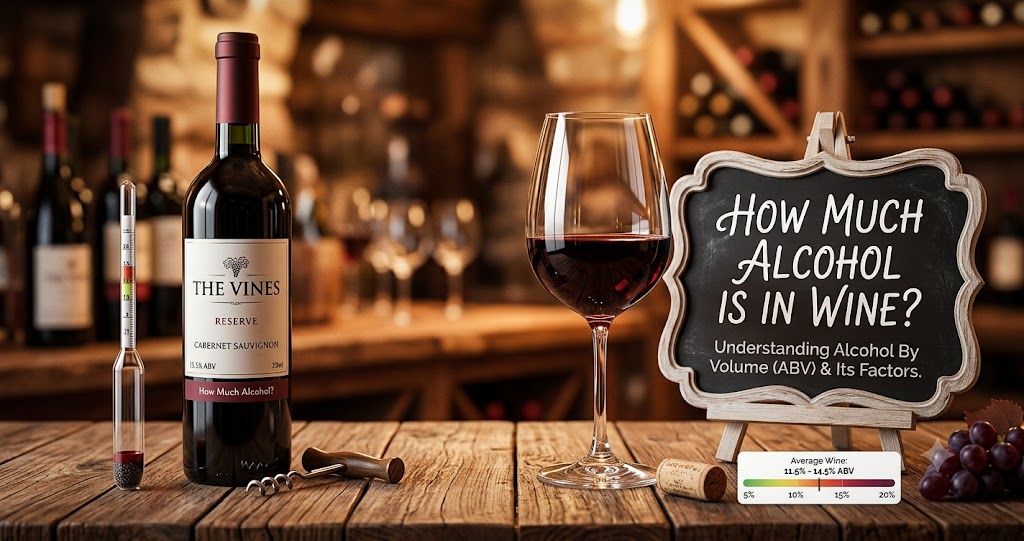
Wine is one of the world’s most popular and loved alcoholic beverages, yet many people wonder about its alcohol content, and what if I tell you that, I’ve even been asked, "Is wine alcohol?" Whether you’re choosing a bottle for dinner, understanding how much wine it takes to get drunk, monitoring your alcohol intake for health reasons, or comparing different wine styles, understanding wine ABV (alcohol by volume) can help you make informed choices.
In this guide we’ll explain alcohol by volume in wine, average wine alcohol content, how much alcohol is in a glass of wine, and which wines have the highest ABV.
What is the Alcohol Percentage in Wine?
Wine ABV stands for Alcohol By Volume. It measures the percentage of pure alcohol contained in a wine.
For example:
- A wine with 12% ABV contains 12% pure alcohol by volume.
- A wine with 15% ABV contains 15% pure alcohol by volume.
The alcohol volume of wine is determined during fermentation, when yeast converts grape sugars into alcohol. Wines of all origins typically display the wine ABV clearly, making it easy to compare different bottles. Different types of wine have different levels of alcohol.
Is Wine Alcohol?
Yes, wine is an alcoholic beverage made by fermenting the grape juice. During fermentation, naturally occurring sugars in the grape juice are converted into ethanol (alcohol), which gives wine its alcoholic potency. Therefore, wine alcohol content varies depending on the grape variety, climate, winemaking style, and fermentation process.
Average Wine Alcohol Content
The average alcohol content of table wine typically ranges from 9% to 15% ABV.
| Wine Style | Average ABV |
|---|---|
| Sparkling Wine | 10% to 12.5% |
| White Wine | 10% to 14% |
| Rosé Wine | 11% to 13.5% |
| Red Wine | 12% to 15% |
| Fortified Wine | 15% to 22% |
Understanding alcohol percent wine helps consumers choose wines that match their preferences and tolerance levels.
White Wine Alcohol Content
White wine alcohol content generally falls between 10% and 14% ABV.
- Riesling: 8% – 12% ABV
- Sauvignon Blanc: 11.5% to 13.5% ABV
- Pinot Grigio: 11% to 13% ABV
- Chardonnay: 12% to 14.5% ABV
Cool-climate white wines often have lower alcohol levels, while warm-climate styles tend to have higher ABV. This is directly related to the natural sugar content in the grapes, which is higher in warm-climate grapes and more moderate in cool-climate grapes.
Red Wine Alcohol Content
Red wine alcohol content is usually higher than many white wines because black grapes mainly grow in warm-climate regions, often achieving a higher degree of ripeness and sugar concentration.
Typical red wine ABV levels include:
- Pinot Noir: 12% to 14.5% ABV
- Merlot: 13% to 14.5% ABV
- Cabernet Sauvignon: 13.5% to 15% ABV
- Syrah/Shiraz: 13.5% to 15.5% ABV
- Zinfandel: 14% to 16% ABV
Red wine ABV is typically higher, giving red wines a fuller body and more texture.
How Much Alcohol Does Wine Have?
The answer to this depends on the one style as the serving size. Most table wines contain between 11% to 14% alcohol by volume in wine. A standard 750ml bottle of wine at 13% ABV contains approximately 97.5ml of pure alcohol. The exact wine alcohol can vary considerably between producers, vintages, and wine styles. Keeping an eye on the wine label for ABV will help you pick the right bottle every time. Since alcohol also hides calories in it, knowing it well will ensure that every time you pour a glass, you know your wine and calories right.
How Much Alcohol Is in a Wine Glass?
A standard serving of wine is 150 ml (5 ounces). The total amount of alcohol in a glass of wine will depend on the ABV of the wine you choose to drink.
For a wine with 13% ABV:
- Wine volume: 150 ml
- Alcohol content: 13%
- Pure alcohol: 19.5 ml
This means a standard glass of wine typically contains roughly the same amount of alcohol as a regular beer or a standard spirit measure.
How Much Alcohol Is In Wine by Size?
The amount of alcohol changes depending on the serving size.
| Wine Serving Size | Wine ABV | Pure Alcohol |
|---|---|---|
| 125 ml | 13% | 16.25 ml |
| 150 ml | 13% | 19.5ml |
| 175 ml | 13% | 22.75 ml |
| 250 ml | 13% | 32.5 ml |
| 750 ml Bottle | 13% | 97.5 ml |
Understanding how much alcohol is in wine by size helps consumers track alcohol consumption more accurately. For instance, lighter and low-alcohol styles are often considered the best wines for women.
What Is Considered High ABV Wine?
A high ABV wine generally contains 14% alcohol or more. Take a look at the high ABV wine style examples:
- Zinfandel
- Amarone della Valpolicella
- Australian Shiraz
- Châteauneuf-du-Pape
- Napa Valley Cabernet Sauvignon wines
These wine styles have a fuller body, more texture, and concentrated flavors, all of which make them more complex too.
Which Wine Has the Most Alcohol by Volume?
For naturally fermented wines, some of the highest ABV levels can reach 15% to 16.5%.
Examples include:
- Amarone della Valpolicella
- Zinfandel
- Shiraz from warm climates
- Grenache-based wine
However, fortified wines contain significantly higher alcohol.
Examples include:
- Port: 19% to 22% ABV
- Sherry: 15% to 22% ABV
- Madeira: 17% to 22% ABV
So if you're asking, "Which wine has the most alcohol by volume?" fortified wines are generally the strongest wine category available.
Does Higher ABV Mean Better Quality?
This is not at all true! The quality of wine depends on many factors—wines with low or high ABV can be top tier or even fall in the segment of unacceptable quality.
A higher wine ABV does not automatically indicate better quality. Alcohol should be balanced with:
- Acidity
- Fruit concentration
- Tannins
- Structure
- Overall balance and harmony
Many outstanding wines are only 11% to 12.5% ABV, while some powerful wines exceed 15% ABV. The best wines achieve balance across all their aspects rather than simply maximizing alcohol content.
Final Thoughts
Wine alcohol varies widely depending on grape variety, region, climate, and winemaking style. Most wines typically have between 11% to 14% ABV, while wines with even higher alcohol can exceed 15%. Having a clear understanding of wine ABV, the alcohol content of wine, and the alcohol percentage in wine can help you compare different styles, estimate alcohol intake, and choose wines that suit your preference and occasion.
Whether you’re trying to drink wine proficiently, enjoying a crisp, citrusy Sauvignon Blanc, a bold Cabernet Sauvignon, or a fortified wine like Port or Sherry, knowing how much alcohol is in wine allows you to appreciate every glass more responsibly.