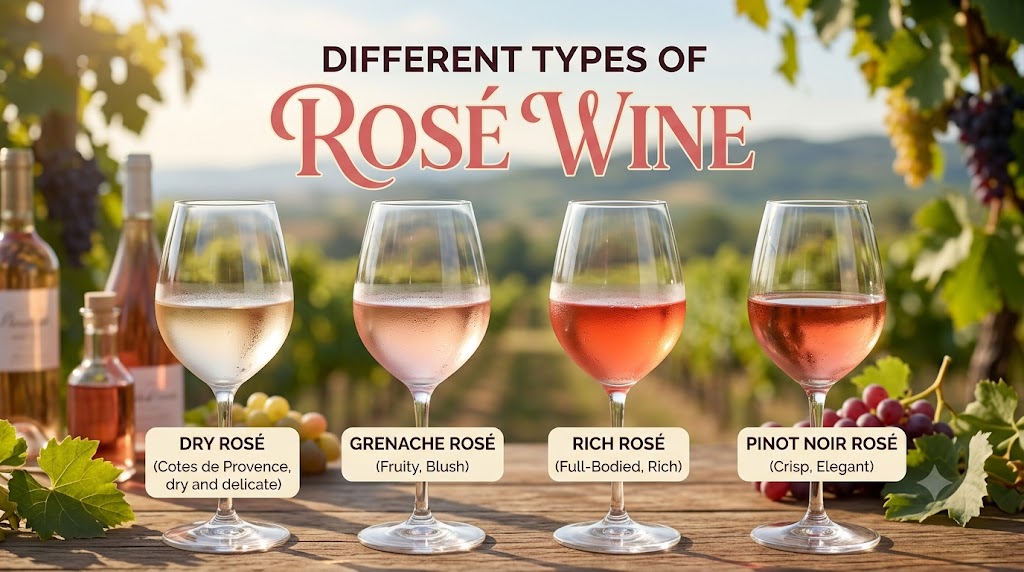
Rosé is no longer just the pretty pink wine we reach for on a sunny afternoon or on a girls’ day out. From pale, bone-dry Provence rosé to rich Tavel, fruity White Zinfandel, and even sparkling rosé, there is a surprisingly wide world of pink wine to explore.
So, how do you know which one to choose? The easiest way is to understand the different types of rosé wine and how they differ in sweetness, body, flavor, and style. Once you know what you like, choosing a bottle becomes much easier.
What is rosé wine?
How is rosé wine made is what differentiates it from red wine. Rosé is made from red grapes, but the grape skins have much less contact with the juice than they would during red wine production. This gives rosé its beautiful pink color while retaining the freshness we often associate with white wine. The color can range from the palest onion skin and peach to salmon, pink, and deeper ruby with an orange hue. And color doesn't necessarily tell you how sweet the wine will be. Rosé can be dry, off-dry, sweet, still, or sparkling. That's what makes the category so interesting. If you're new to the category, you may also want to read our guide on what is rosé wine.
The Main Styles of Rosé
There is no official list that defines every rosé in the world. Instead, to understand rosé wine, one can look at grape variety, region, production method, and sweetness. Here are some of the most useful rosé wine types to know from around the world:
1. Provence Rosé: pale, dry, and elegant
This is probably the style most people picture when they think of modern rosé. Usually pale in color, Provence rosé is typically dry, fresh, and light to medium-bodied. You can expect fresh flavors of strawberry, citrus, peach, herbs, and sometimes a subtle mineral character. Made from varieties such as Grenache, Cinsault, Syrah, and Mourvèdre. It is wonderfully versatile with food. Think grilled fish, salads, Mediterranean vegetables, or seafood, or simply pair this rosé with a plate of fresh cheese on a balmy day.
2. Garnacha Rosado: fruity and lively
Spain's Garnacha Rosado offers a more fruit-forward expression of rosé. Strawberry, raspberry, watermelon, and citrus flavors are common, often balanced by refreshing acidity. It is particularly good with Spanish food. Tapas, seafood, paella, and grilled vegetables are easy matches.
3. Pinot Noir Rosé: delicate and fresh
Pinot Noir can make an elegant, lighter style of rosé with bright acidity and delicate red-fruit flavors. Expect strawberry, raspberry, cherry, and floral notes, sometimes with a subtle earthy character. If you usually enjoy lighter white wines or elegant Pinot Noir, this can be a beautiful rosé to try. Best food pairings would be tossed salads, prosciutto & melon, and open veggie canapés, for more you can read this Pinot Noire and food pairing guide.
4. Mourvèdre Rosé: fuller and more savory
Mourvèdre gives rosé more weight and structure. It is especially associated with southern France and Bandol, where the wines can be quite serious and age-worthy. You may find flavors of red berries, peach, herbs, spice, and savory notes. This is a great choice when you want something that can stand up to grilled fish, lamb, barbecue, or richer Mediterranean dishes.
5. Sangiovese Rosé: bright and refreshing
Italy's Sangiovese can produce rosé with lively acidity and flavors of strawberry, sour cherry, citrus, and red fruit. Italian rosé, often called Rosato, can be made from several local grape varieties and may have more colour and savoury character than the delicate Provence style. These wines are particularly enjoyable with Italian food, from pizza and pasta to grilled vegetables and cheese platters.
6. Tavel: a rosé with more body
Tavel, from the Rhône Valley in France, is one of the more distinctive rosé styles. It tends to be deeper in color and fuller-bodied than a typical pale Provence rosé. It can have ripe red-fruit flavours, herbs, and savoury complexity, making it particularly good with substantial food. So if you thought rosé is always light and delicate, Tavel may change your mind.
7. White Zinfandel – fruity and sweet
White Zinfandel is one of the best-known sweeter styles of rosé, particularly in the United States. It is generally off-dry to medium-sweet, with flavors of strawberry, watermelon, and other ripe fruit. It is very different from the dry, pale rosés associated with Provence. If you enjoy a softer, sweeter, fruitier wine, this may be your style. White Zinfandel can be a superb match for light desserts like meringues, macaroons, or Madeline cakes.
8. Moscato Rosé: sweet, fragrant, and sometimes sparkling
If you are looking for a sweeter rosé, Moscato Rosé is one to know. It is often highly aromatic, with flavors of strawberry, orange, and other ripe fruit. Depending on the wine, it can be still or lightly sparkling, with refreshing acidity balancing the sweetness. This makes it particularly good with spicy food, fruit tarts, or simply as an easy-drinking aperitif. And yes, white moscato and pink moscato (rosé moscato) are different.
9. Rosé Champagne: pink with bubbles
Yes, rosé can sparkle too. Rosé Champagne combines the freshness and structure of Champagne with red-fruit flavors and the visual appeal of its pretty pink color. It can be made using the traditional Champagne grapes and is produced either by blending or through the saignée approach, depending on the producer and style. And if you love bubbles, don't stop at Champagne. Rosé Prosecco is another popular sparkling style known for its easy-drinking nature.
What are the 7 classifications of rosés?
There isn't a universally recognized system of exactly seven official classifications of rosé. However, rosé can be broadly understood through categories such as dry, off-dry, sweet, sparkling, still, light-bodied, and fuller-bodied styles. For everyday wine buying, you should simply know what rosé wine tastes like. It is more useful to think about the wine's sweetness level, body, acidity, grape variety, and origin than to memorize a complicated, fixed classification system.
What is Brut Rosé?
Brut Champagne is a dry sparkling wine. "Brut" refers to the wine's relatively low level of residual sugar, which is often not recognizable on the palate. So a Brut rosé Champagne, despite its pink color and fruity aromas, feels typically dry rather than sweet on the palate. Rosé Champagne labelled Brut is therefore a good choice if you want bubbles, a red-fruit character, and freshness without the noticeable sweetness.
What is the sweetest type of rosé wine?
There isn't one universal answer, but Moscato Rosé and sweeter styles of White Zinfandel are among the rosés commonly found at the sweeter end of the spectrum. Always check the label or producer's description rather than relying on color. Sweet wine labels typically show clear information on grams per liter of sugar, which indicates the sweetness level, allowing you to choose accordingly. A deep pink rosé isn't automatically sweeter, and a very pale rosé isn't automatically dry.
What is the most popular rosé wine?
Provence-style rosé is arguably the most recognizable dry rosé style internationally. It is particularly famous among people looking for a pale, elegant, dry, and refreshing rosé wine. White Zinfandel has also been enormously popular, particularly in the United States amongst circles of sweet wine lovers. Popularity of a wine style, however, depends on the market and whether we're talking about a particular region, grape, brand, or style.
Which rosé should you choose?
Here are some of the best and most unique rosé wine bottles to try based on your taste preference:
- Want something dry and elegant? → Provence Rosé
- Want freshness and red-fruit flavors? → Veuve Clicquot Rosé Champagne
- Want something to pair with weeknight dinner? → The Little Sheep Rosé
- Want the most elegant pink bubbles for a special celebration? → Rare Rosé Millesime Champagne
Final Thoughts
And that is perhaps the best thing about rosé: there isn't just one style. So there’s something for every mood and occasion. From a pale glass of Provence on a warm afternoon to a fuller Tavel with dinner or a celebratory rosé Champagne, the world of pink wine is far bigger and more interesting than it first appears.
Next time you pick up a bottle, don't just ask, "Is it rosé?" Ask: "What kind?"